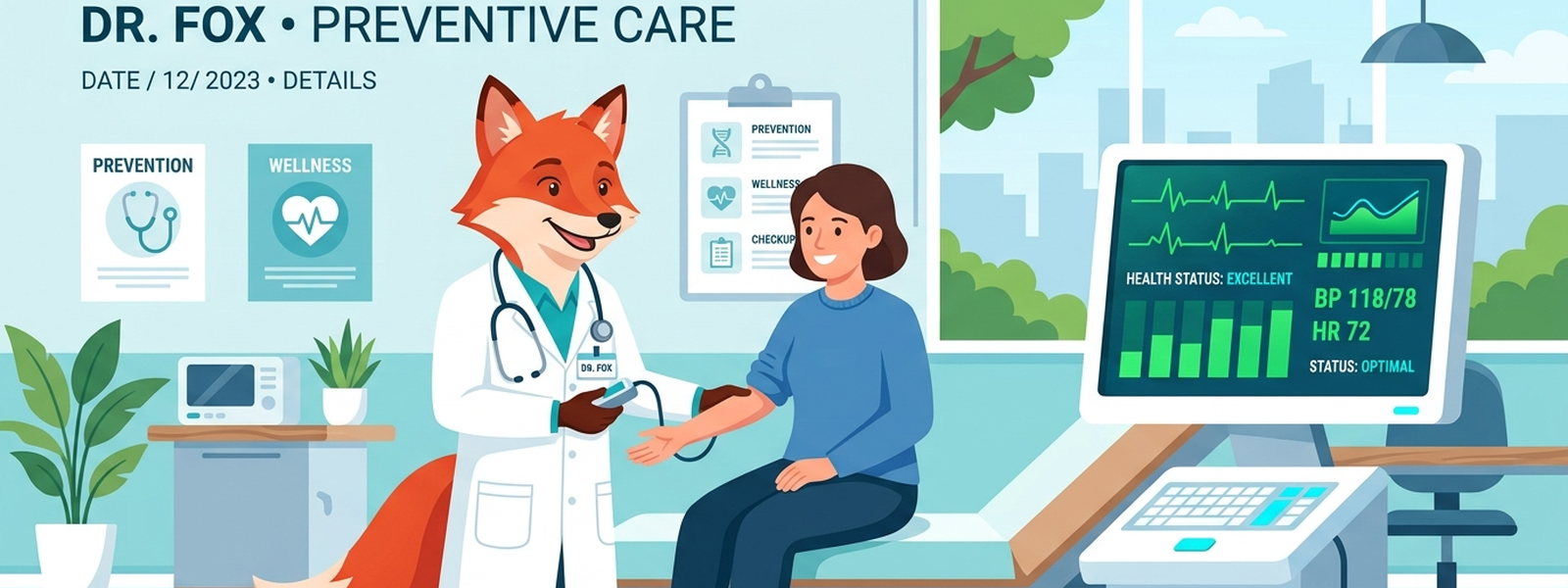
Opening Scene
Catching a developing problem during a routine checkup is cheaper, calmer, and dramatically less risky than catching the same problem once it’s escalated into an emergency room visit. The underlying issue might be identical either way — but where it’s caught changes everything about the cost, the stress, and the odds of a full, uncomplicated recovery. Good preventive care isn’t just nicer than emergency treatment; it’s fundamentally a different, better outcome for the same underlying condition.
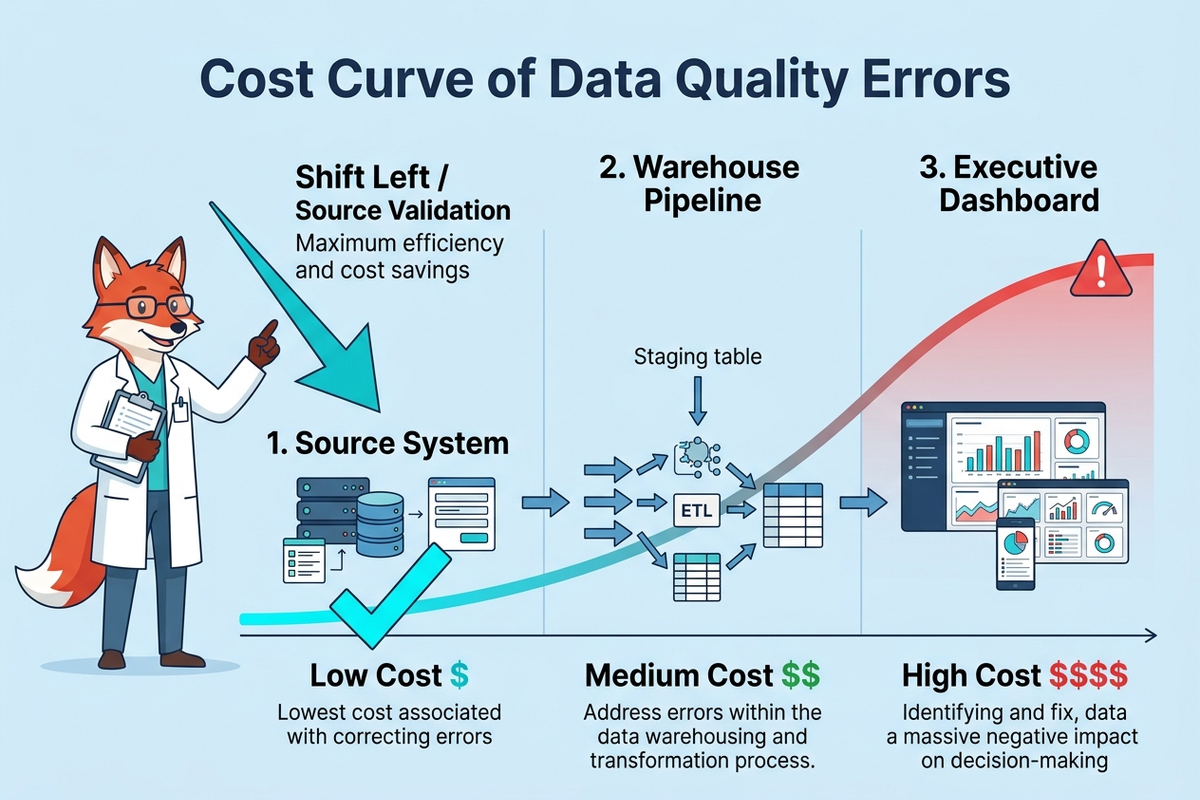
Data quality has this exact same dynamic, and it’s the single biggest lever this series hasn’t fully named yet: catching problems at the point of creation, not downstream after they’ve already caused damage.
In Plain English
Shifting quality checks left means moving validation as close as possible to where data is actually created or first enters a system, rather than only checking it downstream, after it’s already flowed through several pipelines and potentially reached dashboards, models, or decisions. The earlier a problem is caught, the cheaper it is to fix and the less damage it’s had a chance to cause.
The Old Way
Traditional quality checking was often concentrated downstream — at the warehouse, at the reporting layer, wherever data finally landed for consumption — because that’s typically where the visible symptoms (a wrong dashboard number) actually surfaced, and where the team responsible for quality traditionally sat. Checking at the point of creation, often owned by a different team entirely, was frequently nobody’s clearly assigned job.
This downstream concentration meant a problem introduced at the very start of a data’s journey could travel through every intermediate step, potentially reaching production dashboards or models, before being caught — the data equivalent of catching a developing condition only once it’s become a genuine emergency, rather than during a routine early checkup.
What’s Changing (and Why AI Is the Reason)
- Data mesh’s domain ownership model, covered elsewhere on this site, directly supports shifting checks left. When domain teams own their own data as a product (this site’s data-fabric-mesh coverage), quality validation naturally moves closer to the point of creation, since the people producing the data are also responsible for its quality from the start.
- AI-assisted validation is making point-of-creation checks practical without slowing down operational systems. Similar to the low-overhead monitoring covered in Article 8, AI-assisted checks can validate data at the moment of creation without imposing significant friction on the operational systems generating it.
- AI-assisted schema and contract design, covered elsewhere on this site, embeds quality expectations from the very start. Rather than quality being an afterthought applied downstream, AI-assisted data contract design (this site’s dedicated data-contracts-schema-design topic) can bake quality expectations directly into how data is structured and validated at its point of origin.
The Metaphor, Fully Extended
| Hospital Element | Shift-Left Concept |
|---|---|
| Catching a problem during a routine checkup | Validating data at its point of creation |
| Catching the same problem only once it’s become an ER emergency | Catching a quality problem only downstream, after real damage |
| A condition traveling silently through the body before detection | Bad data traveling through multiple pipelines before being caught |
| Preventive care being nobody’s clearly assigned responsibility versus everyone’s | Point-of-creation quality being unclear whose job it is under a centralized model |
| A patient’s own primary care team catching issues early, routinely | A domain team owning quality checks for the data they themselves produce |
For Beginners: What to Actually Do
- Practice tracing, for any data quality issue you encounter, how far downstream it was actually caught relative to where it was actually introduced — that distance is a direct measure of how much unnecessary damage occurred in between.
- Get comfortable with the idea that quality is most naturally owned by whoever creates the data, not just whoever consumes it — a mindset shift this series’ companion data-fabric-mesh coverage explores from the ownership side.
- Notice where validation happens in systems you work with, and ask whether it could realistically happen earlier, closer to the point of creation, rather than only downstream.
- Understand this article as connecting directly to two other topics on this site — data mesh’s domain ownership and data contracts’ upfront quality expectations — rather than as an isolated new idea.
For Practitioners and Leaders: The Deeper Layer
- Map your highest-impact quality incidents by where they were introduced versus where they were actually caught, and use that gap to build a concrete case for shift-left investment.
- Pair shift-left quality investment directly with domain ownership initiatives (this site’s data-fabric-mesh coverage) — the two reinforce each other, since ownership naturally motivates catching problems at the source.
- Use AI-assisted, low-overhead validation specifically to make point-of-creation checking practical without imposing unacceptable friction on operational teams who aren’t primarily focused on data quality.
- Treat quality expectations embedded in data contracts (this site’s dedicated schema-and-contracts topic) as the most durable form of shift-left investment — expectations defined once at the source apply automatically to everything built on top of that data going forward.
Quick Recap
- Shifting quality checks left means validating data as close as possible to its point of creation, rather than only catching problems downstream after real damage has occurred.
- Traditional quality checking was concentrated downstream, often because that’s where symptoms visibly surfaced and where the team responsible for quality happened to sit.
- Domain ownership models directly support shift-left quality by placing responsibility with the people actually producing the data.
- AI-assisted, low-overhead validation and upfront data contract design both make point-of-creation quality checking genuinely practical rather than merely aspirational.
Where This Fits in the Series
Article 15 covered communicating incidents clearly. This article covered preventing them earlier in the first place. Article 17 looks at what happens when the patient receiving care is an AI agent, not a person.
Key References
- OpenLineage Specification — Open standard for data lineage collection and pipeline observability metadata.
- Great Expectations Data Testing Framework — Open-source python tool for data quality assertions and validation.
- EU General Data Protection Regulation (GDPR) Official Text — European regulatory framework for data compliance, security, and governance.
Subscribe to the Newsletter
Get the latest DataParables articles delivered straight to your inbox.