
Opening Scene
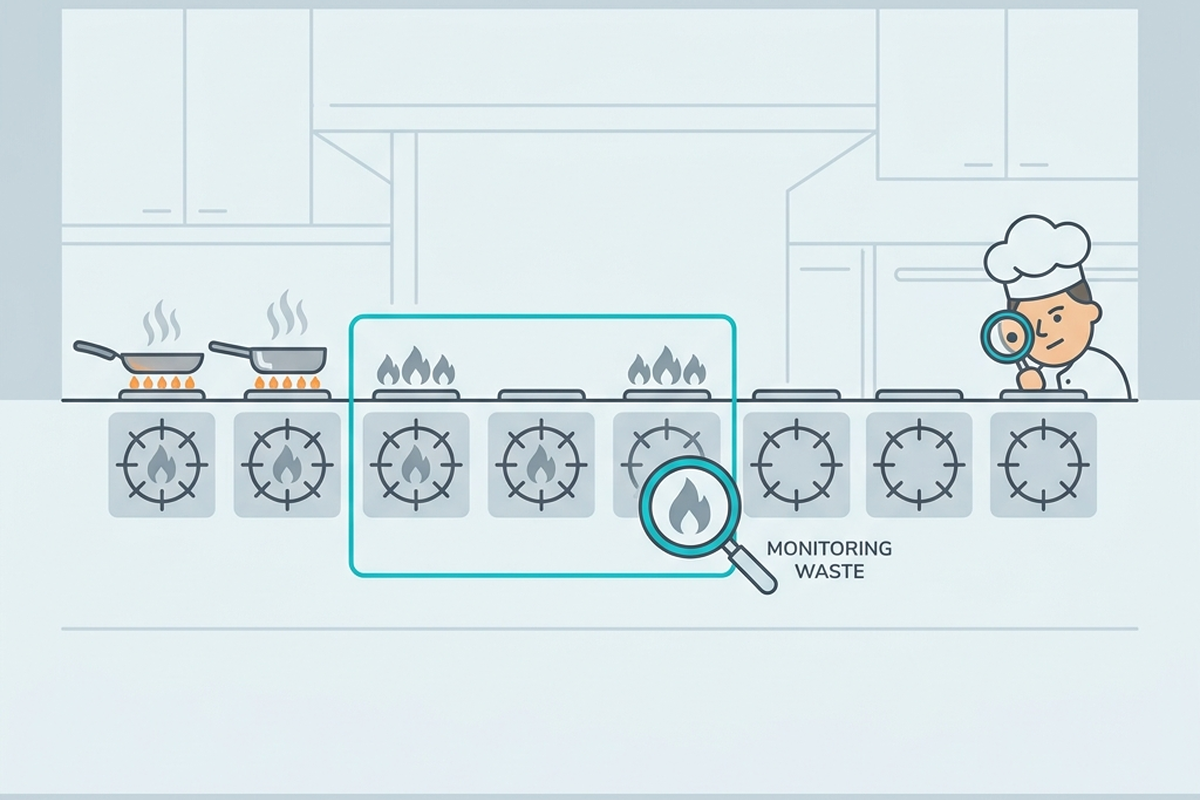
A burner left on with an empty pan doesn’t produce anything, but it still costs exactly as much gas as one that’s actually cooking. Multiply that by a kitchen running twelve burners around the clock, half of them idle at any given moment, and the wasted cost adds up fast — quietly, because nobody’s watching the gas meter in real time, only the bill at the end of the month.
Pipelines waste compute the exact same way, and the waste is just as invisible until someone actually goes looking for it.
In Plain English
Every pipeline run consumes real resources — compute, storage, data transfer — and all of it costs money. Pipeline cost efficiency means running only what’s actually needed: not reprocessing data that hasn’t changed, not running a job more often than its output is actually used, not keeping infrastructure provisioned for peak load it rarely reaches. None of this is exotic. Most of it is the direct, practical payoff of disciplines already covered in this series — idempotency, incremental loading, right-sized scheduling — showing up on a bill instead of just in reliability.
The Old Way
Traditionally, pipeline cost was often an afterthought, addressed only once a bill got uncomfortably large — a reactive scramble to find savings, rather than a habit built in from the start. Common culprits were the same ones this series has already covered from a reliability angle: full reloads run out of caution rather than necessity (Article 7), pipelines scheduled far more frequently than their output was ever actually consumed, and infrastructure sized for a worst case that happened once and was never revisited.
This wasn’t usually negligence — it reflected a reasonable prioritization when compute was a smaller fraction of overall cost. As pipelines grew in number and scale, that same casualness became expensive in a way it hadn’t been before.
What’s Changing (and Why AI Is the Reason)
- AI can spot waste that’s easy to miss manually. Given a pipeline’s run history, AI-assisted analysis can now identify jobs that consistently process very little new data relative to their cost, schedules that run more often than their output is actually queried, and other patterns a person would have to dig through logs and dashboards to notice — the equivalent of someone finally walking the kitchen floor and finding every burner that’s been idling unnoticed.
- Resource sizing is getting more automatically responsive. Instead of provisioning fixed capacity for a rarely-hit peak, AI-assisted infrastructure can increasingly scale resources to match actual, real-time demand — closer to a kitchen only firing up extra burners when a rush actually arrives, rather than keeping them lit all night just in case.
- The cost of AI itself is now part of the pipeline cost conversation. As pipelines increasingly use AI for schema inference, transformation drafting, and monitoring, that usage has its own real cost — worth tracking explicitly rather than treating as a rounding error, especially as it scales across many pipelines simultaneously.
The Metaphor, Fully Extended
| Kitchen Element | Pipeline Cost Concept |
|---|---|
| A burner left on with nothing cooking | Compute spent reprocessing data that hasn’t meaningfully changed |
| Running twelve burners around the clock, most idle | Infrastructure over-provisioned for a peak that’s rarely hit |
| The end-of-month gas bill nobody saw coming | An unexpectedly large cloud bill from unmonitored pipeline waste |
| Walking the kitchen floor to find every idle burner | AI-assisted analysis surfacing wasteful pipeline patterns |
| Only firing up extra burners when a rush actually arrives | Auto-scaling resources to match real-time demand |
| Tracking the cost of the sous chef’s own time, not just ingredients | Tracking the real cost of AI usage within pipelines |
For Beginners: What to Actually Do
- Get in the habit of asking, for any pipeline you build, how much it actually costs to run and how often its output is actually used. A mismatch between the two is the most common source of easy savings.
- Learn to read your platform’s cost breakdown by pipeline, not just the total bill — you can’t fix what you can’t see itemized.
- Revisit full reloads specifically (Article 7) as a first place to look for savings — they’re a common, easy-to-spot source of unnecessary cost.
- When you introduce AI-assisted steps into a pipeline, track their cost from day one rather than assuming it’s negligible. It’s much easier to monitor from the start than to reconstruct later.
For Practitioners and Leaders: The Deeper Layer
- Pipeline cost efficiency is largely a byproduct of the reliability disciplines already covered in this series — idempotency, incremental loading, right-sized scheduling — which means investing in reliability and investing in cost control are often the same investment, not competing priorities.
- Reactive cost-cutting, done once after an uncomfortable bill, tends to regress — build periodic cost review into a standing process rather than treating it as a one-time cleanup project.
- Auto-scaling infrastructure reduces waste but shifts risk toward unpredictability if not bounded properly — set explicit ceilings so “the system will scale to meet demand” doesn’t become “the system can silently run up an unbounded bill during an anomaly.”
- As AI usage inside pipelines grows, track its cost with the same rigor as compute and storage. It’s easy for a genuinely useful capability to become a significant, under-scrutinized line item simply because nobody set up the tracking for it early.
Quick Recap
- Every pipeline run has a real cost, and waste — reprocessing unnecessarily, over-provisioning, over-scheduling — is just as invisible as a burner left on until someone actually checks.
- Traditionally, pipeline cost was addressed reactively, after a bill got uncomfortable, rather than as an ongoing discipline.
- AI-assisted analysis can now surface wasteful patterns and enable infrastructure that scales to real demand rather than a fixed worst case.
- Cost efficiency and reliability are largely the same investment — the disciplines from earlier in this series pay off on the bill, not just in uptime.
- AI usage itself now has a real, trackable cost that deserves the same scrutiny as compute and storage.
Where This Fits in the Series
Article 16 covered describing a pipeline instead of writing it by hand. This article covered what all of it actually costs to run. Article 18 looks at a newer kind of “diner” this series has mentioned throughout but not yet focused on directly — pipelines built specifically to feed AI systems, like retrieval-augmented generation.
Key References
- dbt Core Documentation — Official documentation for data transformation workflows, DAG creation, and testing.
- Apache Airflow Architecture Guide — Open-source platform standards for orchestrating complex data pipelines.
- Apache Kafka Documentation — Industry standard specification for real-time event streaming pipelines.
Subscribe to the Newsletter
Get the latest DataParables articles delivered straight to your inbox.