Opening Scene
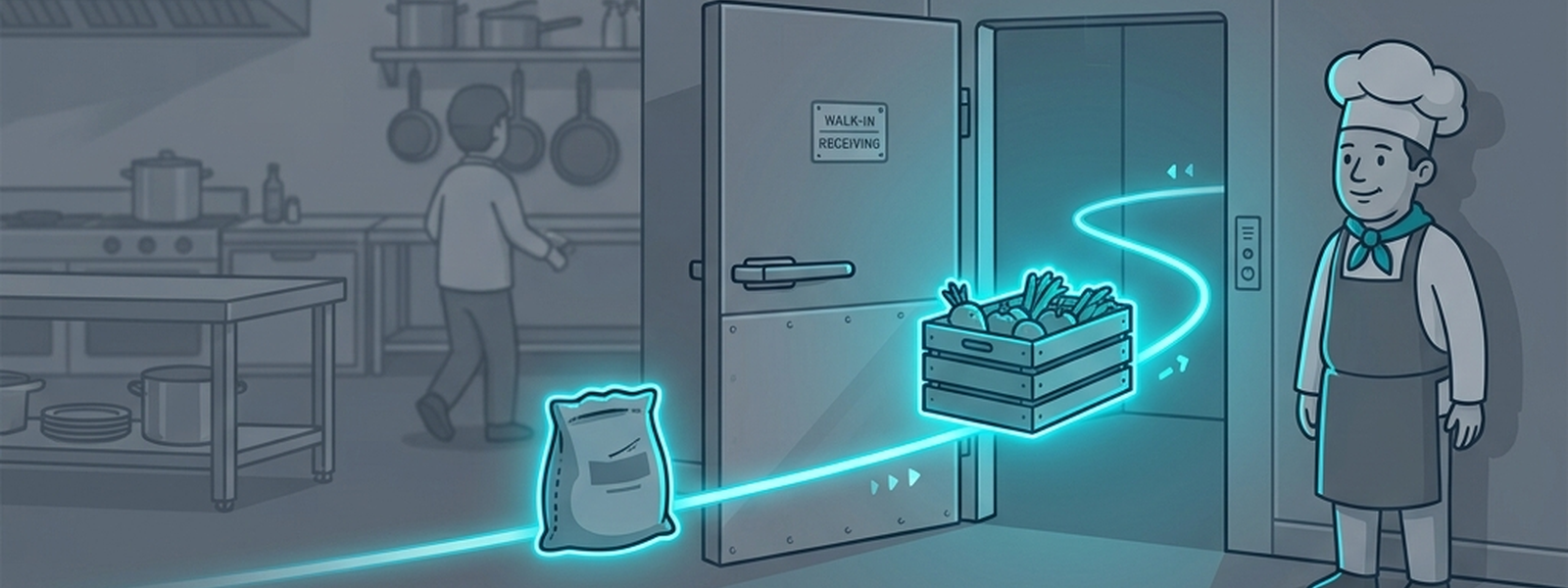
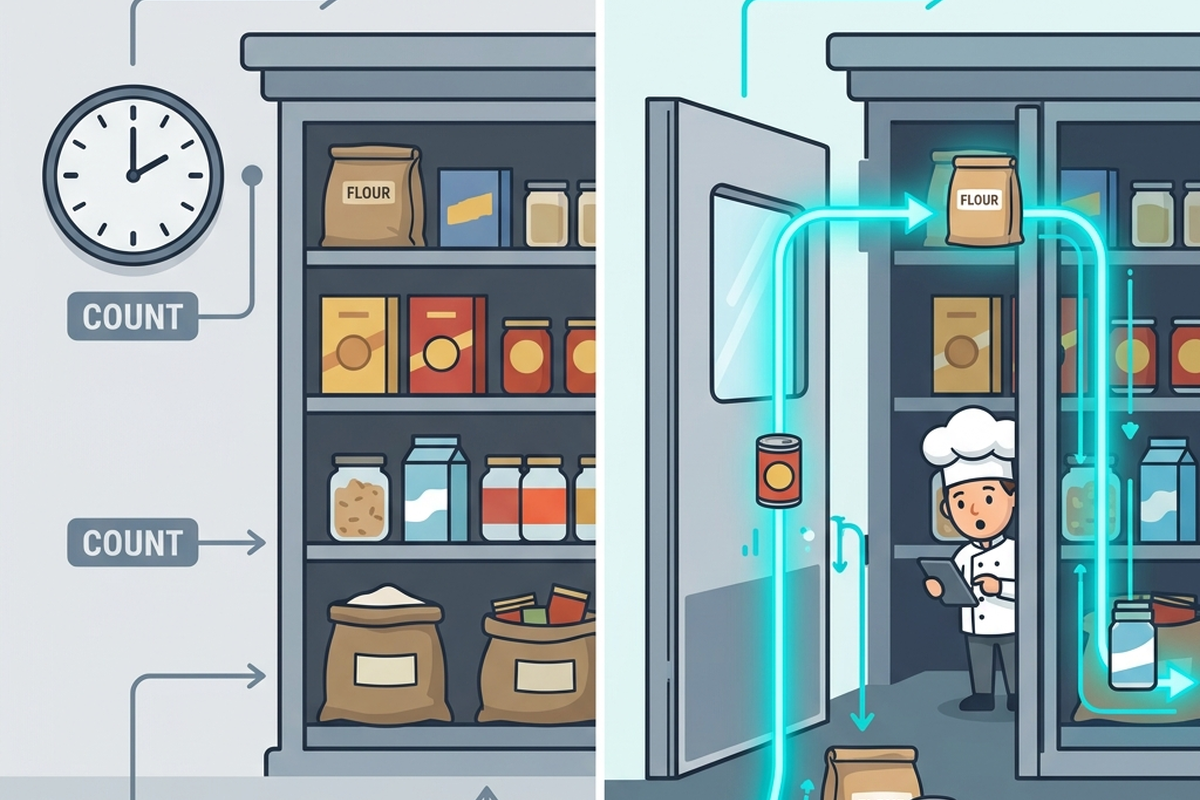
One way to know what’s changed in the pantry is to count everything, every hour, and compare the count to last time. It works, but it’s slow, and it tells you something changed without telling you exactly what, or when. A faster way: put someone at the walk-in door, watching every single item that goes in or out, the instant it happens. Now you don’t need to guess what changed between counts — you already have a complete, exact record of every single change, as it happened.
That second approach is change data capture, and it’s a fundamentally different way of feeding a pipeline than periodically checking for what’s different.
In Plain English
Change data capture (CDC) watches a source system’s own internal record of changes — the log it already keeps of every insert, update, and delete — and streams those changes to a pipeline as they happen, instead of periodically querying the whole dataset and comparing it to last time. It’s a more precise, more immediate way of doing what Article 7’s incremental loading does, and it’s especially valuable for sources that change constantly and where “as of an hour ago” isn’t good enough.
The Old Way
Traditionally, keeping a downstream system in sync with a source meant periodically querying it — every hour, every night — and figuring out what had changed, usually via a timestamp field as covered in Article 7. This worked, but it had two real limits: it only sees the state at each check, not everything that happened in between, and if something changed and then changed back before the next check, that entire event is invisible. It’s the pantry-counting approach: accurate about the current total, blind to the actual history of comings and goings.
For sources changing rapidly — an order-processing system, a live inventory feed — this gap between checks meant downstream systems were always working with data that was, at best, slightly stale, and at worst, missing transient changes that genuinely mattered.
What’s Changing (and Why AI Is the Reason)
- CDC infrastructure is easier to stand up than it used to be. Configuring a source’s change log to stream reliably into a pipeline used to require specialized expertise. AI-assisted tooling can now help configure and validate a CDC pipeline for a given source system, lowering the bar to using it where it genuinely helps, rather than defaulting to periodic checks purely because CDC felt too complicated to set up.
- CDC streams are a natural fit for AI agents that need current state. An agent acting on live business data benefits directly from seeing changes as they happen rather than working from a snapshot that’s already an hour stale — the walk-in door watcher, not the hourly headcount, is what an agent expecting real-time accuracy actually needs underneath it.
- Anomalies in the change stream itself are easier to catch. AI-assisted monitoring can watch the pattern of changes flowing through CDC — an unusual spike in deletes, an unexpected burst of updates — and flag it as a potential problem at the source, something a periodic snapshot comparison would likely miss entirely between checks.
The Metaphor, Fully Extended
| Kitchen Element | Change Data Capture Concept |
|---|---|
| Counting the whole pantry every hour | Periodic, snapshot-based incremental checking |
| Watching the walk-in door continuously | Change data capture streaming every insert, update, and delete |
| An item that goes in and out between counts, invisible to the headcount | A transient change missed by periodic snapshot comparison |
| The doorwatcher’s running log of every item movement | The source system’s internal change log that CDC reads from |
| Setting up a reliable doorwatcher shift | Configuring CDC infrastructure for a given source |
| Noticing an unusual rush of items leaving all at once | Anomaly detection on the pattern of a CDC change stream |
For Beginners: What to Actually Do
- Reach for CDC specifically when “as of the last check” genuinely isn’t good enough — not by default for every source, since it adds real infrastructure complexity that not every use case needs.
- Understand the difference concretely: periodic incremental checking sees current state at intervals; CDC sees every individual change as it happens. Know which one a given problem actually calls for.
- If you’re new to CDC, study one real source’s change log directly before building anything downstream — seeing the raw stream builds intuition that no amount of reading about it will.
- When using AI-assisted CDC setup tooling, verify the resulting stream against a source you can independently check, especially early on, before trusting it for something important.
For Practitioners and Leaders: The Deeper Layer
- CDC is a meaningful operational commitment, not just a technical upgrade — it introduces a continuously running dependency on the source system’s change log, which needs its own monitoring, alerting, and on-call ownership distinct from a periodic batch job.
- The value of CDC scales with how much a use case actually needs completeness and immediacy — a nightly report doesn’t benefit much from watching the door continuously; a live fraud-detection system very much does. Match the investment to the actual requirement.
- As AI agents increasingly expect near-real-time accuracy, evaluate which of your critical sources still rely purely on periodic snapshots and whether that gap has become a real limitation, not just a historical default nobody’s revisited.
- Anomalies in a CDC stream are often the earliest possible signal of a source-side problem — before it shows up in any downstream report. Treat that stream as a monitoring asset in its own right, not just a data-delivery mechanism.
Quick Recap
- Change data capture streams every individual insert, update, and delete from a source as it happens, instead of periodically checking for differences.
- Traditional periodic checking is simpler but can miss transient changes and always lags behind real time by at least the check interval.
- AI tools are lowering the barrier to setting up CDC reliably and can monitor the change stream itself for early anomaly signals.
- CDC is a real operational commitment, best reserved for sources where completeness and immediacy genuinely matter.
- AI agents needing current state are a growing reason CDC is worth the added complexity where it used to be optional.
Where This Fits in the Series
Article 12 covered surviving a source that changes shape unexpectedly. This article covered watching a source that changes constantly, on purpose. Article 14 looks at the opposite problem: what a pipeline does when it’s fallen behind and needs to catch up on everything it missed.
Key References
- dbt Core Documentation — Official documentation for data transformation workflows, DAG creation, and testing.
- Apache Airflow Architecture Guide — Open-source platform standards for orchestrating complex data pipelines.
- Apache Kafka Documentation — Industry standard specification for real-time event streaming pipelines.
Subscribe to the Newsletter
Get the latest DataParables articles delivered straight to your inbox.