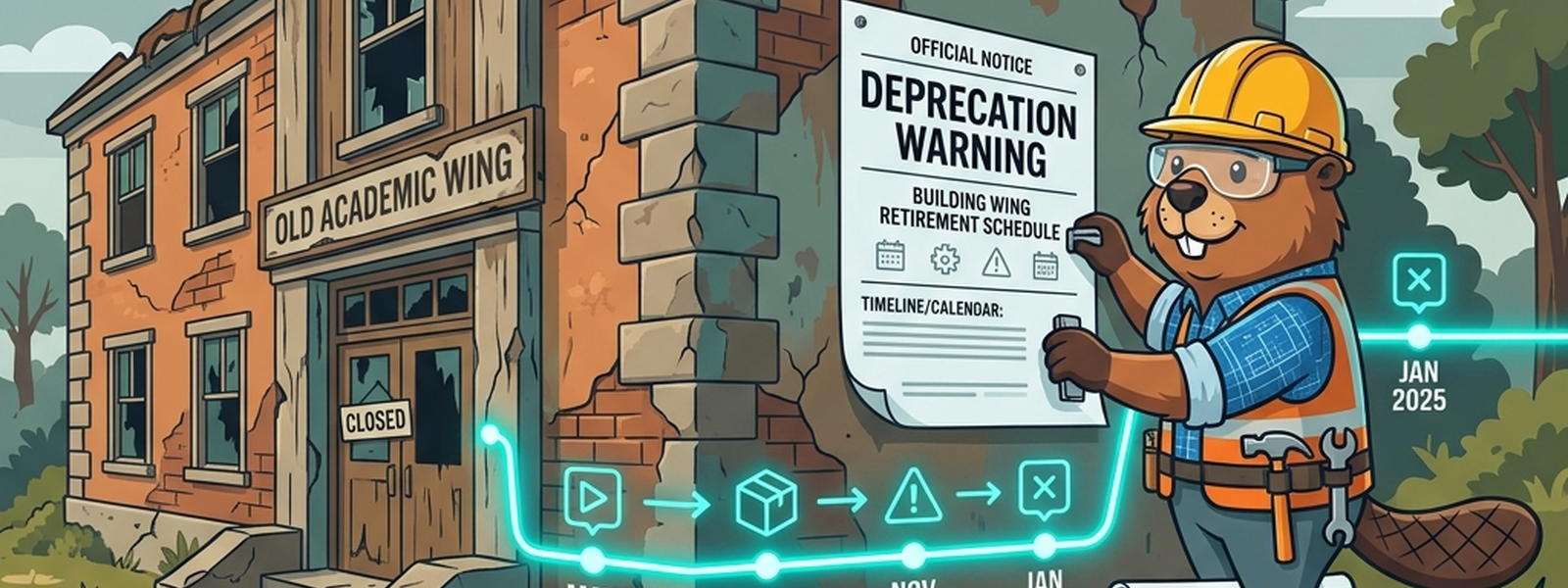
Opening Scene
Even after every tenant has moved to the new wing, a careful building manager doesn’t quietly demolish the old one without notice. A condemnation notice goes up, with a real timeline, giving anyone who might have missed the earlier announcement one last chance to notice, object, or confirm they’re genuinely clear. Only after that notice period passes does demolition actually happen.
Deprecating and removing old schema elements deserves this exact same deliberate, visible process.
In Plain English
Deprecation marks a schema element as scheduled for removal, with a clear, visible signal and a real timeline, giving any consumer who might still depend on it — even ones the migration process from Article 16 didn’t fully account for — a genuine chance to notice and respond before the element is actually removed. Skipping this deliberate final step, even after a thorough expand-contract migration, risks quietly breaking a consumer nobody knew was still there.
The Old Way
Before deliberate deprecation processes, removing old schema elements often happened with much less visibility:
- An old field or table was sometimes removed as soon as its known consumers had migrated, with no additional notice period, similar to demolishing the old wing the moment the known tenants had moved out, without checking for anyone else.
- A consumer that had somehow been missed during migration tracking discovered the removal only when their queries started failing, similar to someone discovering their old wing was demolished only by trying to walk into where it used to be.
- Without a documented deprecation timeline, “when is this actually getting removed” was often an informal, poorly communicated question, leaving consumers with genuine uncertainty about how much time they actually had.
This quiet, undertelegraphed removal is precisely what deliberate deprecation processes were built to replace.
What’s Changing (and Why AI Is the Reason)
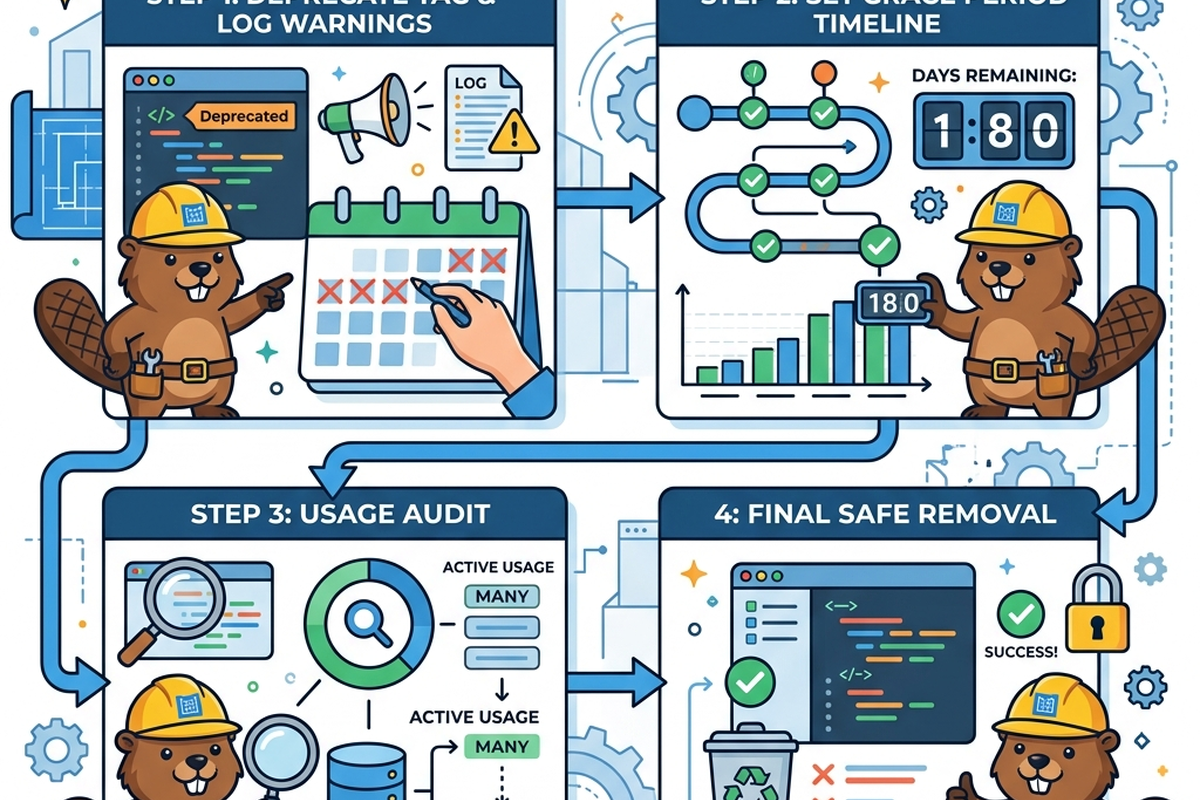
- AI-assisted usage monitoring can continuously check whether a deprecated schema element still has any genuine, active consumers, even ones that weren’t identified during the original migration tracking, catching a straggler before removal rather than after. This directly extends the migration progress tracking introduced in Article 16, applied specifically to the final deprecation window.
- AI-assisted deprecation notices can be automatically generated and distributed to identified consumers, including specific, concrete information about what’s being removed and by when, replacing informal or easily missed communication with a documented, trackable notice. This makes deprecation genuinely visible rather than relying on someone remembering to mention it.
- AI-assisted safe-removal verification can perform one final automated check immediately before actual removal, confirming zero active usage remains, catching a last-minute straggler that appeared after the notice period began. This closes the final risk window between “we believe it’s safe to remove” and the removal actually happening.
The Metaphor, Fully Extended
| Building Element | Deprecation Concept |
|---|---|
| A condemnation notice posted with a real, visible timeline | A deprecation notice with a documented removal timeline |
| Someone who missed the earlier announcement getting one last chance to respond | A consumer that wasn’t identified during migration getting caught by continued monitoring |
| Demolition happening quietly, with no notice, right after the known tenants moved out | Removal happening immediately after known consumers migrate, with no deprecation window |
| Discovering a wing was demolished only by trying to walk into where it used to be | A missed consumer discovering a removal only when their queries start failing |
| A final walkthrough confirming the building is genuinely empty right before demolition begins | AI-assisted safe-removal verification confirming zero active usage right before removal |
For Beginners: What to Actually Do
- Never remove a schema element immediately after known consumers have migrated — always add a genuine deprecation notice period.
- Treat deprecation notices as a real communication responsibility, not just a comment in internal documentation.
- Use AI-assisted usage monitoring to catch stragglers your original migration tracking might have missed.
- Notice that this final step exists specifically to catch the consumers the expand-contract pattern from Article 16 didn’t fully account for.
For Practitioners and Leaders: The Deeper Layer
- Establish a documented, consistently applied deprecation timeline as a standard final step after any schema migration.
- Use AI-assisted deprecation notices to make removal genuinely visible to affected consumers, rather than relying on informal communication.
- Use AI-assisted safe-removal verification as a final automated check immediately before removal, catching last-minute stragglers.
- Treat deprecation as the genuine final safety net in the schema evolution process, not an optional courtesy step that can be skipped under deadline pressure.
Quick Recap
- Deprecation marks a schema element for removal with a clear, visible notice and a real timeline, catching consumers the migration process might have missed.
- This directly parallels a condemnation notice with a real timeline before an empty wing is actually demolished.
- AI-assisted usage monitoring and deprecation notices make this final step genuinely visible and trackable, rather than informal and easily missed.
- AI-assisted safe-removal verification performs one final check immediately before removal, closing the last risk window.
Where This Fits in the Series
Article 16 covered the expand-contract migration pattern. This article covered the condemned wing — deprecating and removing old schema elements safely. Article 18 looks at a city of many boroughs, each with its own blueprint.
Subscribe to the Newsletter
Get the latest DataParables articles delivered straight to your inbox.