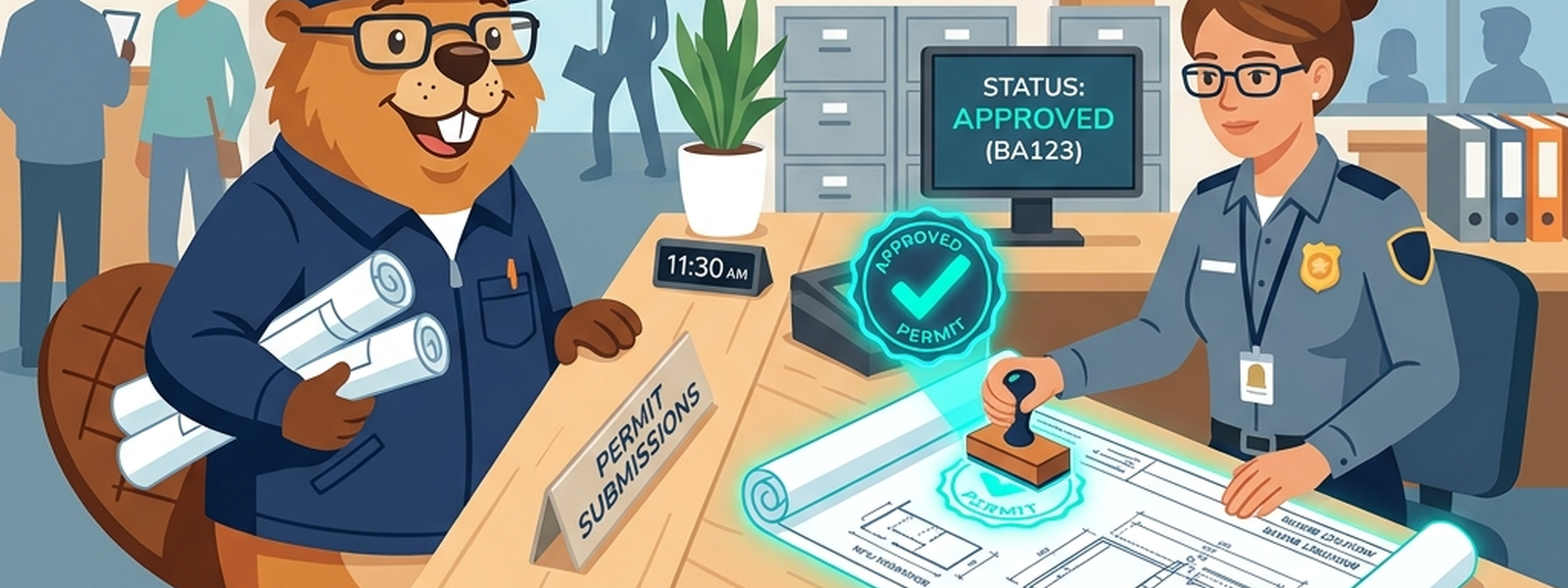
Opening Scene
Before any real construction begins, a city’s permit office reviews the plans — checking that the proposed work meets code, that it won’t endanger a neighboring structure, that it’s been classified correctly as routine or as requiring extra scrutiny. The permit office doesn’t design the building. It exists to catch a genuine problem before the first wall goes up, when catching it is still cheap.
Schema change review plays this exact same checkpoint role for a database schema.
In Plain English
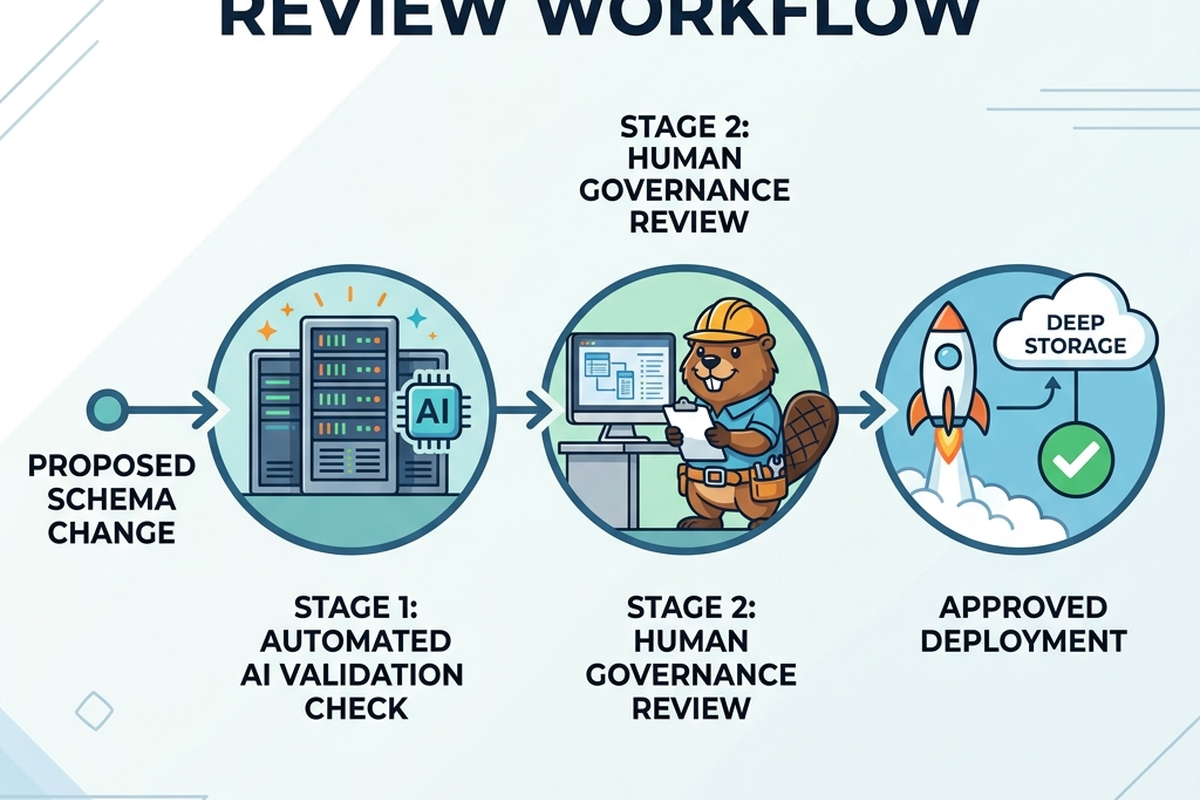
Schema change governance establishes a review process — often a required approval step in a schema registry or CI pipeline — that checks a proposed schema change against established rules (is it correctly classified as additive or breaking, does it maintain required compatibility, does it follow the team’s versioning scheme) before it can actually ship, catching a problem while it’s still cheap to fix.
The Old Way
Before deliberate governance processes, schema changes often shipped with much less structured review:
- A schema change could sometimes ship directly from a single engineer’s judgment, with no independent checkpoint, similar to construction beginning without anyone from the permit office reviewing the plans first.
- Review, when it happened, was often informal and inconsistent — a quick Slack message or a passing comment in a pull request — rather than a documented, repeatable process applied uniformly.
- Problems caught only after a change shipped were far more expensive to fix than the same problem caught during review, similar to a structural issue discovered after a wall is already built rather than while it’s still on paper.
This inconsistent, ad hoc review is precisely what deliberate schema governance processes were built to replace.
What’s Changing (and Why AI Is the Reason)
- AI-assisted schema review can now automatically check a proposed change against the additive-versus-breaking classification, compatibility requirements, and versioning conventions established throughout this arc, flagging a genuine problem before a human reviewer even looks at it. This directly operationalizes Articles 11 through 14’s disciplines into a concrete, automated first pass.
- This automated first pass lets human reviewers focus their limited attention on the judgment calls that genuinely need it — is this breaking change actually worth the coordination cost, does this new field’s naming genuinely make sense — rather than manually re-checking mechanical rules an AI system can verify faster and more consistently. This is a genuine efficiency gain, not just a speed improvement.
- AI-assisted governance can also track a schema change’s actual downstream impact after it ships, closing the loop on whether the pre-deployment review’s risk assessment turned out to be accurate, feeding that information back into how future changes get classified and reviewed. This turns governance from a one-time gate into a continuously improving discipline.
The Metaphor, Fully Extended
| Building Element | Schema Change Governance Concept |
|---|---|
| A city permit office reviewing plans before construction begins | A schema change review process before a change ships |
| Checking that proposed work meets code and won’t endanger a neighbor | Checking a change against additive/breaking classification and compatibility rules |
| Construction beginning without any permit office review | A schema change shipping straight from one engineer’s judgment, unreviewed |
| A structural issue caught on paper, before a wall is built | A schema problem caught during review, before it reaches production |
| A permit office tracking whether past approved projects actually turned out as expected | AI-assisted governance tracking a shipped change’s actual downstream impact |
For Beginners: What to Actually Do
- Treat schema change review as a genuine, expected checkpoint, not an optional courtesy step.
- Get comfortable with an automated first-pass review catching mechanical issues, freeing human review for genuine judgment calls.
- Before requesting review, self-check your own change against the additive/breaking and compatibility disciplines covered earlier in this arc.
- Notice that catching a problem during review is always cheaper than catching it after a change has already shipped.
For Practitioners and Leaders: The Deeper Layer
- Establish a documented, consistently applied schema change review process, rather than leaving review to informal, ad hoc judgment.
- Use AI-assisted schema review to automate mechanical rule-checking, freeing human reviewers for genuine judgment calls.
- Close the loop by tracking a shipped change’s actual downstream impact, feeding that information back into future review and classification.
- Treat governance as a discipline that compounds in value, catching increasingly subtle problems as the review process itself improves over time.
Quick Recap
- Schema change governance establishes a review checkpoint that catches problems before they ship, when they’re still cheap to fix.
- This directly parallels a city’s permit office reviewing construction plans before the first wall goes up.
- AI-assisted schema review can now automatically check mechanical rules, freeing human reviewers for genuine judgment calls.
- AI-assisted governance can also track a shipped change’s actual impact, turning review into a continuously improving discipline.
Where This Fits in the Series
Article 14 covered backward and forward compatibility during a phased transition. This article covered the permit office — schema change review and governance. Article 16 looks at actually moving tenants to the new wing.
Subscribe to the Newsletter
Get the latest DataParables articles delivered straight to your inbox.