Opening Scene
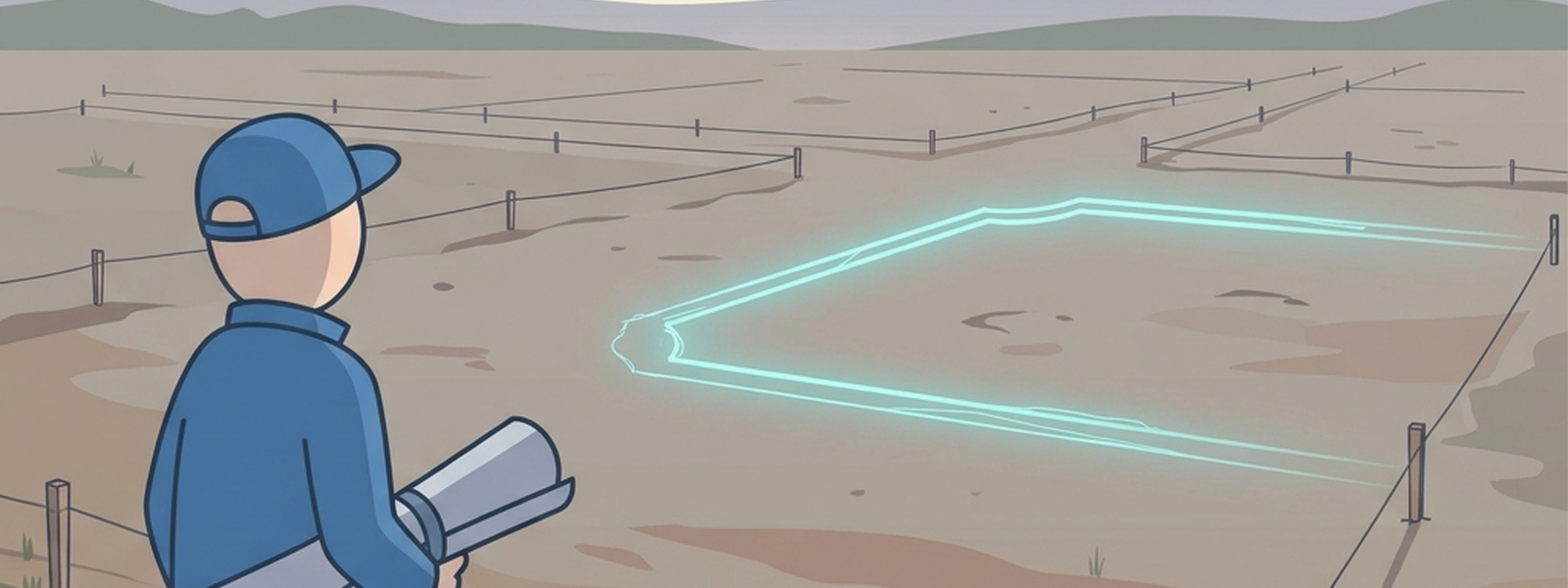
Before a single building goes up, a city starts as an empty lot and one person standing at its edge holding a rolled-up blueprint under one arm. Nothing is built yet. There’s no skyline, no streets, no address anyone could mail a letter to. But the decisions made right now — where the main road runs, which lot becomes the market square, how the water lines connect — will shape everything the city ever becomes. Get the blueprint wrong, and every building that goes up afterward inherits the mistake.
This series is about that blueprint, and about the person who draws it: the data modeler, standing at the edge of an empty lot that will one day be an entire data ecosystem.
In Plain English
A data model is the plan for how information will be organized, written down before a single table exists. It names the things a business cares about (customers, orders, shipments), the facts worth keeping about each one, and how they connect. Everything that gets built afterward — the database, the dashboard, the AI assistant answering a question about last quarter’s sales — inherits whatever the blueprint got right or wrong.
The Old Way
Data modelling has always been the least glamorous, most consequential work in the entire data ecosystem. Nobody outside the discipline notices it when it’s done well — a well-modeled system just quietly works, the way a well-planned city just quietly has its water arrive on time and its ambulances take the shortest route. Notice it, instead, when it’s done poorly: a “customer” that means three different things in three different tables, a relationship nobody documented until the system that depended on it broke.
Traditionally, this work happened up front, by hand, by someone senior enough to have seen a badly modeled system fail before. It was slow because it had to be — a mistake caught at the blueprint stage costs an afternoon’s redraw; the same mistake caught after the city is built costs a demolition crew. That asymmetry is why careful modelers have always been willing to go slowly at the start.
What’s Changing (and Why AI Is the Reason)
- The blueprint can be sketched faster. AI tools can now take a plain-English description of a business, or even a pile of messy existing spreadsheets, and propose a rough first model in minutes — a starting sketch where there used to be a blank page. The empty lot doesn’t have to stay empty while someone works up the nerve to start drawing.
- The city is getting a second kind of resident. For as long as data modelling has existed, the plan was written for one audience: humans, reading table names and column descriptions to figure out what a system meant. AI agents and copilots are now moving into the neighborhood too, querying these same structures directly, with no instinct to knock on a colleague’s door and ask what an ambiguous column actually means. A model that was “good enough for a human who could ask” is no longer good enough on its own.
- The blueprint is never really finished now. Cities used to be planned once and built out over decades. AI-assisted tooling has made revisiting and refining a model cheap enough that “final” has quietly stopped meaning what it used to — the throughline for the rest of this series is a blueprint that keeps getting redrawn, safely, as the city around it keeps changing.
The Metaphor, Fully Extended
| City Element | Data Modelling Concept |
|---|---|
| The empty lot | A business or system with no data model yet |
| The rolled-up blueprint | The data model, not yet drawn |
| The person standing at the lot’s edge | The data modeler or architect |
| Unrolling the blueprint | The act of designing the model |
| The finished city | The working data ecosystem — databases, dashboards, applications |
| A new resident reading a street map | An AI agent or copilot querying the model directly |
| A demolition crew called in late | The cost of a modelling mistake caught after the system is built |
| The city growing and changing over decades | The data model evolving as the business evolves |
For Beginners: What to Actually Do
- Before you touch a database tool, sit with the plain-English question every model answers: what are the things this business cares about, and how do they relate? Everything else is detail.
- Resist the urge to skip straight to building because an AI tool can generate a schema quickly — a fast wrong answer is still wrong, just faster.
- Practice reading models other people built before you design your own. A city planner learns as much from walking finished neighborhoods as from drawing new ones.
- When an AI tool proposes a first-draft model, treat it exactly like a junior architect’s sketch: a useful starting point, not a finished plan.
For Practitioners and Leaders: The Deeper Layer
- The asymmetry that made careful modelling worthwhile — cheap mistakes early, expensive mistakes late — hasn’t gone away with AI assistance. If anything, faster drafting raises the stakes on catching mistakes before they get built on top of.
- Start treating “will an AI agent be able to understand this model correctly, unsupervised” as a real design requirement, not an afterthought. The second audience arriving in this series’ second point isn’t hypothetical anymore.
- Budget for modelling as ongoing infrastructure work, not a one-time project that finishes at launch. The rest of this series will keep returning to that idea from different angles.
- If your organization treats data modelling as something junior engineers do quickly on the way to “real” work, that’s worth revisiting — every expensive data failure this series will discuss traces back to a blueprint that was drawn too fast or trusted too little.
Quick Recap
- A data model is the blueprint for a data ecosystem, drawn before anything is built.
- Careful modelling has always mattered because mistakes are cheap to fix early and expensive to fix late.
- AI can now sketch a first-draft model fast, but the judgment to evaluate that draft still belongs to a person.
- AI agents are becoming a second audience for data models, alongside humans — raising the bar for clarity, not lowering it.
- This series will walk through the blueprint, room by room: how it’s drafted, how relationships are found, how it’s organized, stored, changed safely, and ultimately understood by both people and machines.
Where This Fits in the Series
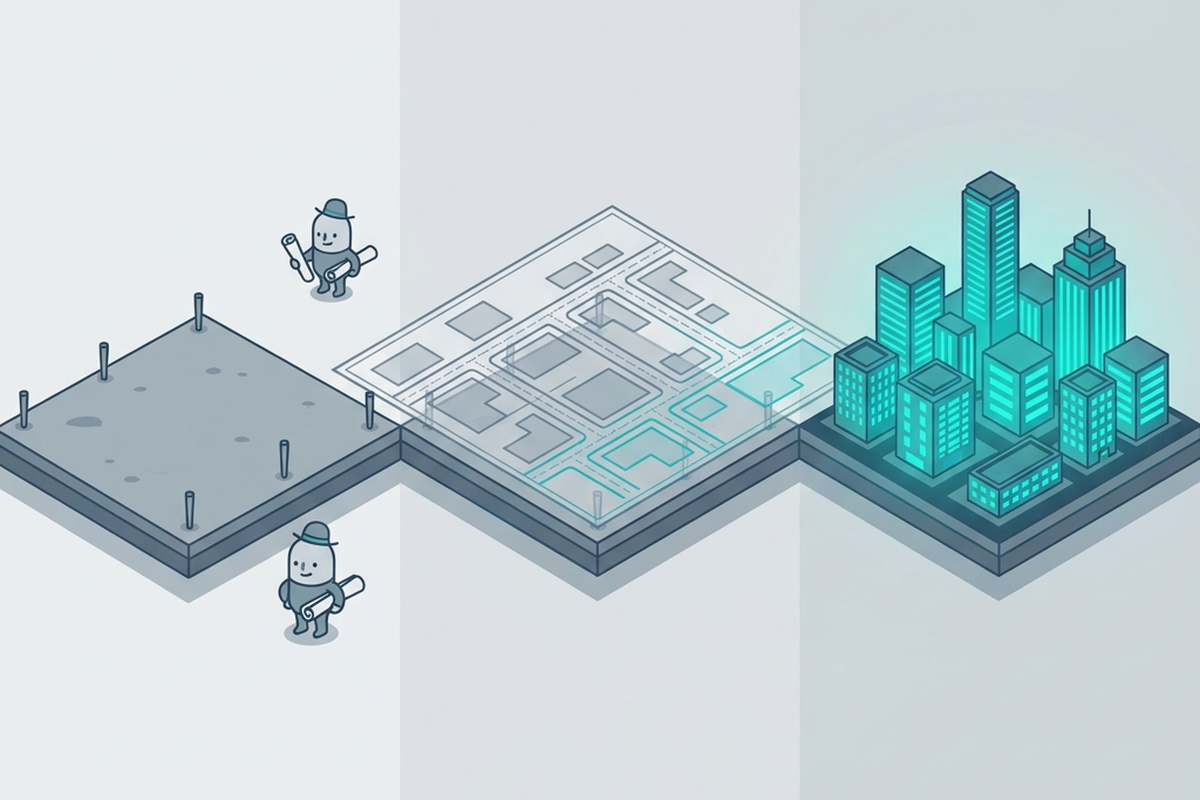
This is the opening article — the empty lot, before a single line is drawn. Article 2, “Three Drafts of the Same House,” steps up to the drafting table itself, walking through the conceptual, logical, and physical models every data system passes through on its way from idea to reality.
Subscribe to the Newsletter
Get the latest DataParables articles delivered straight to your inbox.