
Opening Scene
A utility meter keeps running for any device left plugged in and drawing power, even in an empty room nobody’s using — the cost accumulates quietly, unnoticed, until the bill arrives. Cloud data warehouse compute carries this exact same risk: resources left running idle, forgotten after a project ended, quietly accumulate real, avoidable cost.
In Plain English
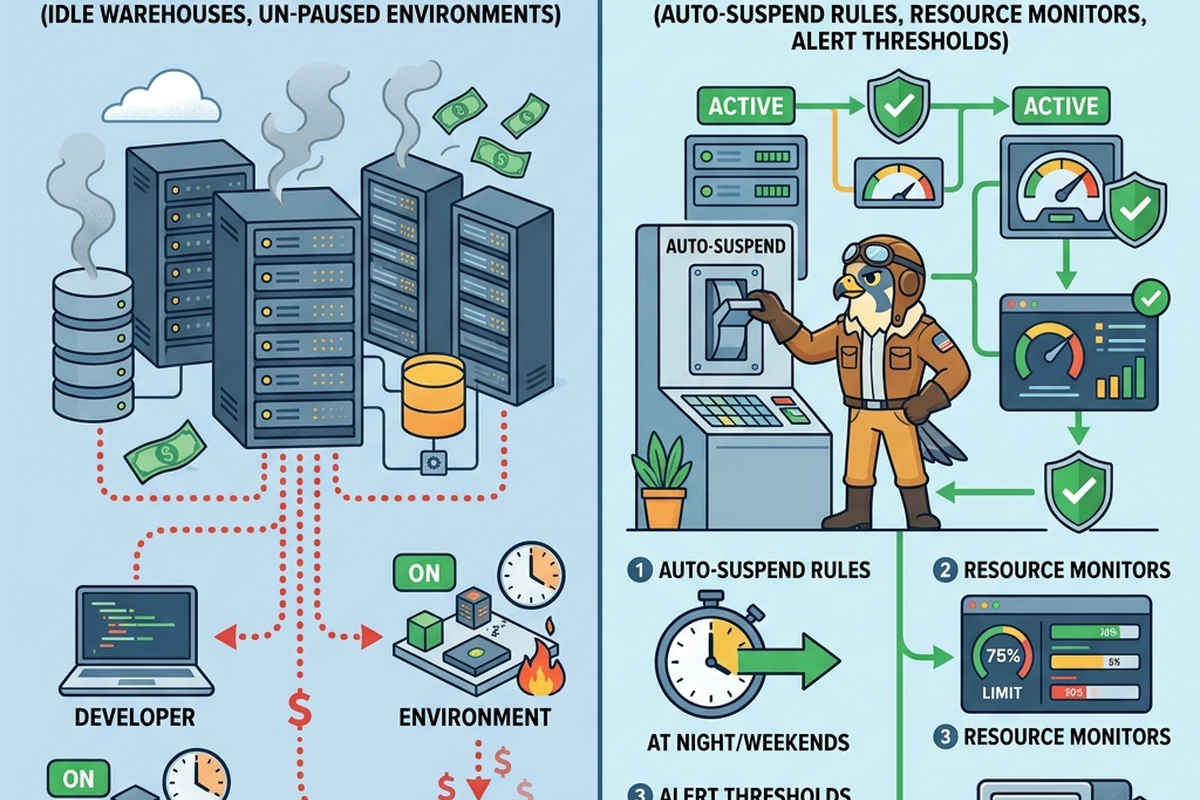
Idle or forgotten compute resources — a warehouse left running after a project’s active phase ended, an auto-scaling configuration that never scales back down, a development environment nobody remembered to pause — are one of the most common, avoidable sources of unnecessary cloud data warehouse cost. This connects directly to the cost monitoring practices covered in this content library’s dedicated data platform cost and FinOps series, applied here specifically to the elastic scaling covered in Article 5, which only delivers genuine savings if it’s actually configured and monitored correctly.
The Old Way
Before this specific waste pattern was widely recognized and actively monitored, idle compute often went unnoticed until costs had already accumulated:
- Idle compute resources were sometimes left running without anyone actively monitoring for this specific, common waste pattern.
- There wasn’t yet a well-established practice of automatically detecting and alerting on resources that had been idle for a genuinely significant period.
- Cost surprises were sometimes discovered only at the monthly billing cycle, well after idle resources had already accumulated significant, avoidable cost.
Active, automated detection of idle resources reflects the cost management discipline covered throughout this content library’s data platform cost and FinOps series.
What’s Changing (and Why AI Is the Reason)
- Organizations increasingly build automated detection and alerting for idle compute resources, connecting directly to the cost monitoring practices covered in this content library’s data platform cost and FinOps series.
- This connects directly to the elastic scaling covered in Article 5, since properly configured auto-suspend and scale-down settings are the primary defense against this specific waste pattern.
- As this discipline matures, organizations increasingly treat idle resource detection as a standard, continuous operational practice, not a periodic, manual audit.
The Metaphor, Fully Extended
| The Utility Grid | Idle Compute Waste Concept |
|---|---|
| A meter running for a device left plugged in an empty room | Compute running for a warehouse left active after a project ended |
| Cost accumulating quietly, unnoticed, until the bill arrives | Cost accumulating quietly, unnoticed, until the monthly bill arrives |
| A common, avoidable pattern of waste | A common, avoidable pattern of cloud data warehouse cost |
| Active monitoring catching this before it accumulates | Automated detection catching this before it accumulates |
For Beginners: What to Actually Do
- Practice auditing your organization’s cloud data warehouse for any resources that have been idle for an extended period.
- Learn to configure auto-suspend and scale-down settings correctly, connecting directly to the elastic scaling covered in Article 5.
- Get comfortable exploring the cost monitoring practices covered in this content library’s data platform cost and FinOps series.
For Practitioners and Leaders: The Deeper Layer
- Build automated detection and alerting for idle compute resources as a standard, continuous operational practice.
- Verify that elastic scaling configurations, covered in Article 5, genuinely include reliable scale-down and auto-suspend settings.
- Connect idle resource management directly to the broader cost management discipline covered in this content library’s data platform cost and FinOps series.
Quick Recap
- Idle or forgotten compute resources are one of the most common, avoidable sources of cloud data warehouse cost.
- This connects directly to the cost monitoring practices covered in this content library’s data platform cost and FinOps series.
- Properly configured auto-suspend and elastic scale-down settings are the primary defense against this waste.
- Automated, continuous detection is more effective than periodic, manual auditing.
Where This Fits in the Series
Article 9 covered the risk of idle compute waste. Article 10 turns to a backup generator for when the grid goes down: redundancy and disaster recovery.
Key References
- Snowflake Documentation — Comprehensive technical documentation for cloud-native data warehousing.
- Google Cloud BigQuery Architecture Overview — Scalable serverless cloud database specifications.
- AWS Redshift Database Developer Guide — Amazon Web Services cloud data warehouse documentation.
Subscribe to the Newsletter
Get the latest DataParables articles delivered straight to your inbox.