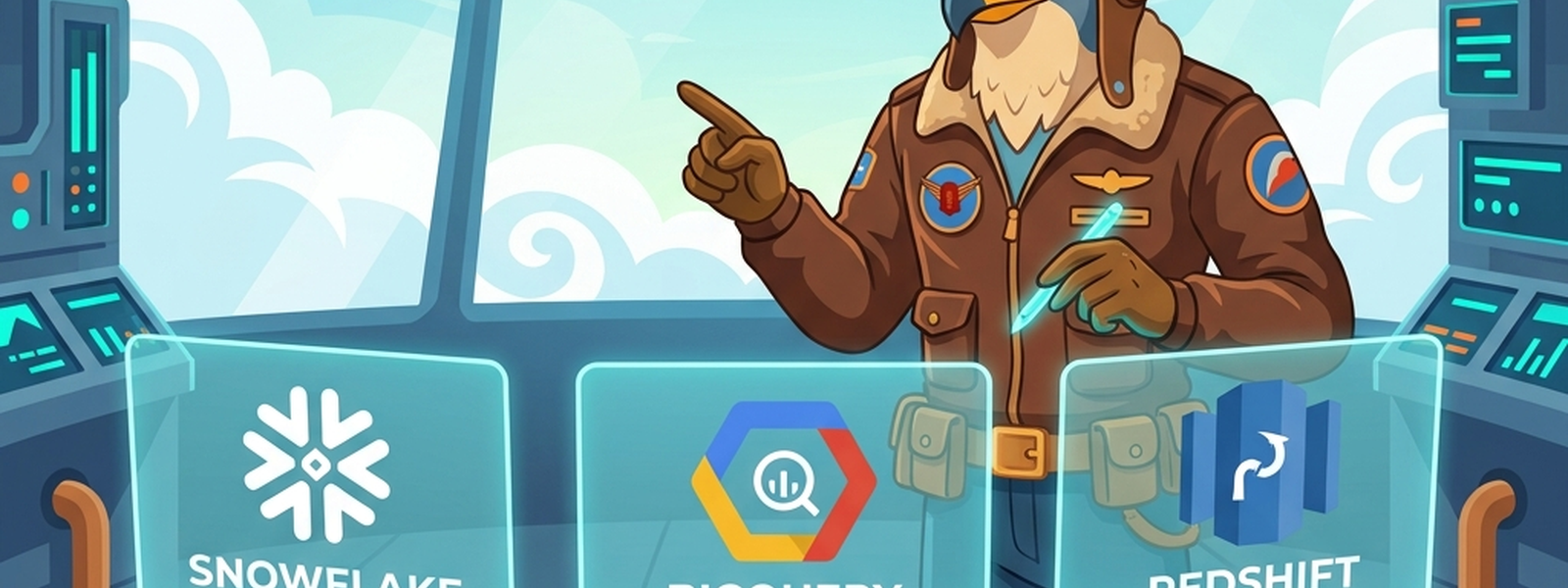
Opening Scene
Choosing a utility provider, where genuine choice exists, involves weighing more than the advertised rate — reliability track record, service terms, and how well their infrastructure fits your specific location and needs. Choosing among cloud data warehouse platforms deserves this same deliberate, multi-factor evaluation, not a decision made purely on a feature comparison spreadsheet.
In Plain English
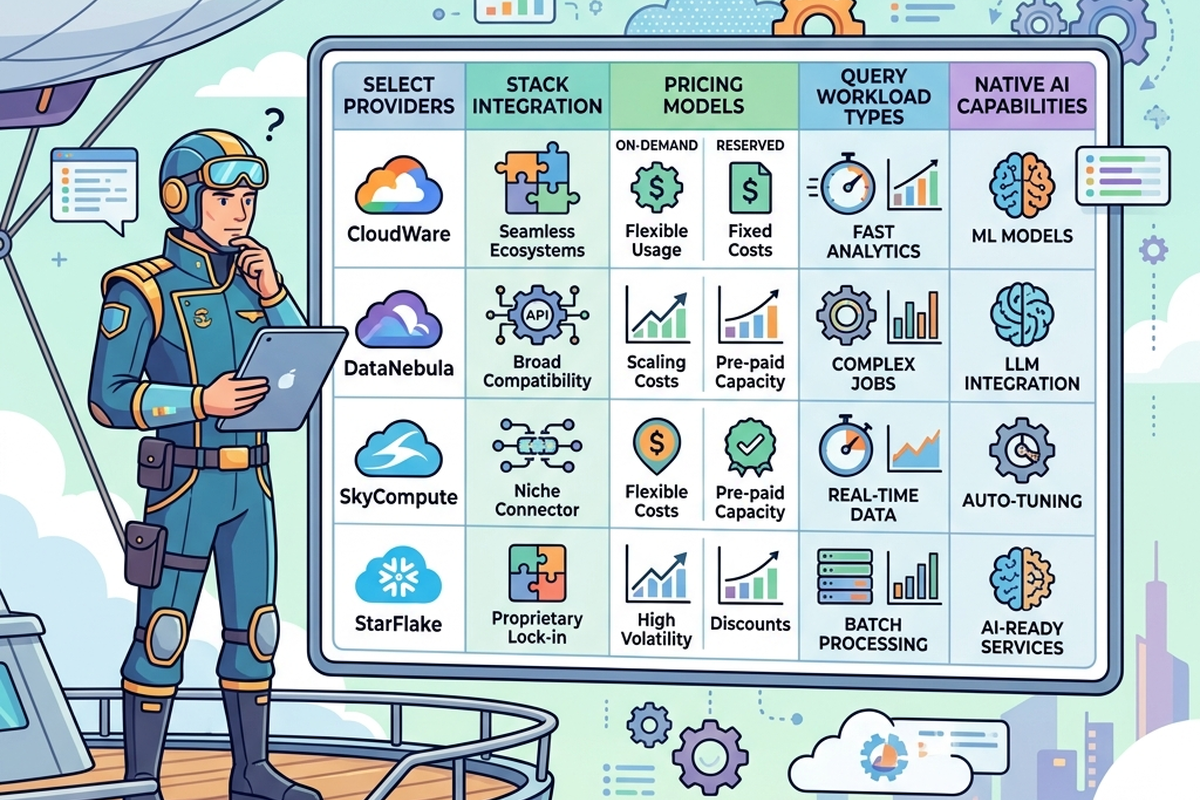
Selecting a cloud data warehouse platform means weighing genuine, practical factors together: how well it integrates with your organization’s existing cloud provider and data stack, its specific pricing model and how that maps to your actual workload patterns, its support for the specific query patterns and data types your organization uses, and increasingly, its native support for AI and machine learning workloads directly within the platform.
The Old Way
Before this kind of deliberate, multi-factor evaluation was standard practice, platform selection was sometimes made more narrowly:
- Platform selection was sometimes made based primarily on feature checklists, without genuine evaluation against actual organizational workload patterns.
- There wasn’t yet a well-established practice of weighing integration with an organization’s existing cloud ecosystem as a genuinely decisive factor.
- Pricing model fit — how well a platform’s specific pricing structure matched an organization’s actual usage pattern — wasn’t always evaluated carefully upfront.
A genuine, multi-factor evaluation, weighing integration, pricing fit, and workload match together, reflects the accumulated lessons from organizations navigating real platform selection decisions.
What’s Changing (and Why AI Is the Reason)
- Organizations increasingly evaluate platforms against their actual, specific workload patterns, connecting directly to the pricing model considerations covered in Article 2.
- This connects directly to the multi-cloud considerations covered in this content library’s dedicated multi-cloud and hybrid strategies series, since platform selection often has to account for existing multi-cloud commitments.
- As AI workloads have grown, native AI and machine learning integration has become an increasingly significant differentiator among cloud data warehouse platforms.
The Metaphor, Fully Extended
| The Utility Grid | Platform Selection Concept |
|---|---|
| Weighing more than just the advertised rate | Weighing more than just a feature comparison checklist |
| Reliability track record and service terms | Integration quality and support for actual workload patterns |
| Fit with your specific location and needs | Fit with your specific existing cloud ecosystem and data stack |
| A deliberate, multi-factor choice, not an automatic default | A deliberate, multi-factor choice, not a checklist-driven default |
For Beginners: What to Actually Do
- Practice comparing two cloud data warehouse platforms against your organization’s actual, specific workload patterns, not just their feature lists.
- Learn to evaluate pricing model fit specifically against real usage patterns, connecting directly to the billing concepts covered in Article 2.
- Get comfortable researching a platform’s native AI and machine learning integration capabilities as a genuine evaluation factor.
For Practitioners and Leaders: The Deeper Layer
- Build a genuine, multi-factor evaluation framework for platform selection, weighing integration, pricing fit, and workload match together.
- Connect platform selection directly to existing multi-cloud commitments, covered in this content library’s dedicated multi-cloud and hybrid strategies series.
- Weigh native AI and machine learning integration as an increasingly significant differentiator in platform selection decisions.
Quick Recap
- Selecting a cloud data warehouse platform requires weighing integration, pricing fit, and workload match together.
- This is a genuinely deliberate, multi-factor decision, not one made from a feature checklist alone.
- Native AI and machine learning integration has become an increasingly significant differentiator.
- Platform selection often needs to account for existing multi-cloud commitments.
Where This Fits in the Series
Article 8 covered deliberate platform selection. Article 9 turns to a genuine, honest risk: the meter running even when the lights are off.
Key References
- Snowflake Documentation — Comprehensive technical documentation for cloud-native data warehousing.
- Google Cloud BigQuery Architecture Overview — Scalable serverless cloud database specifications.
- AWS Redshift Database Developer Guide — Amazon Web Services cloud data warehouse documentation.
Subscribe to the Newsletter
Get the latest DataParables articles delivered straight to your inbox.