Opening Scene
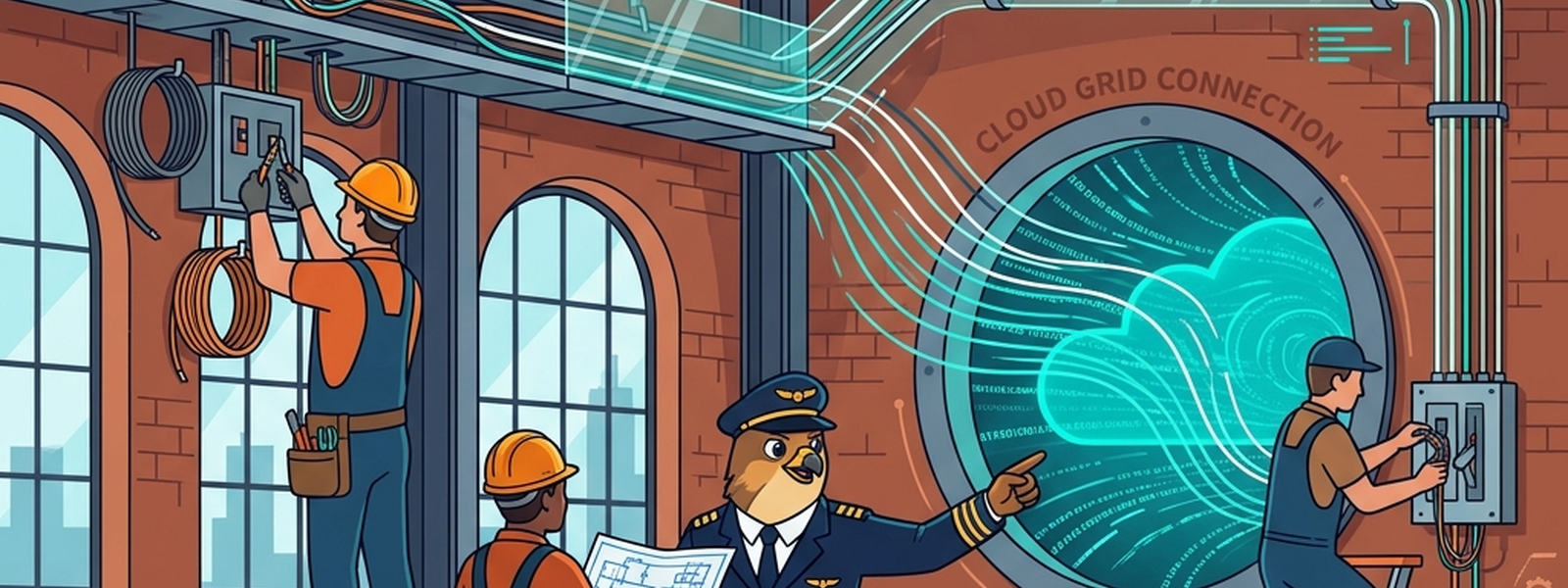
Connecting an existing house to the grid isn’t just flipping a switch. It requires genuine rewiring work, careful sequencing so the lights don’t go dark mid-project, and a period where both the old generator and the new grid connection coexist until the transition is verified complete. Migrating from an on-premises data warehouse to a cloud data warehouse deserves this same careful, deliberate sequencing.
In Plain English
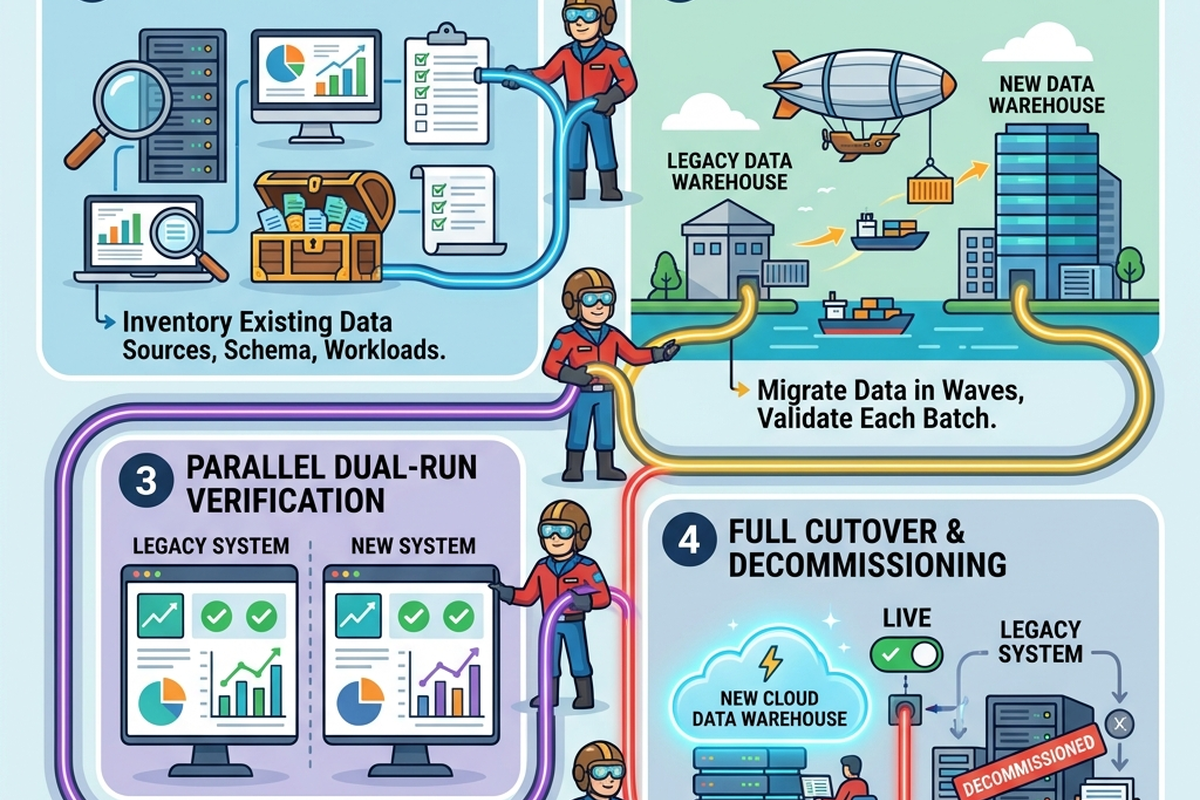
Migrating to a cloud data warehouse typically involves several genuine phases: assessing and cataloging existing data and workloads, migrating data incrementally rather than all at once, running the old and new systems in parallel to verify correctness, and only then cutting over fully and decommissioning the legacy system, covered fully in Article 19. This connects directly to the broader data platform migration considerations covered in this content library’s dedicated series.
The Old Way
Before well-established migration practices existed for cloud data warehouses specifically, organizations sometimes approached this transition more riskily:
- Some early cloud migrations attempted a single, large cutover event, without a parallel-running verification period, risking significant disruption if something went wrong.
- There wasn’t yet a well-established, phased playbook specifically for data warehouse migrations, as distinct from general application migration.
- Data validation between old and new systems was sometimes informal, risking undetected discrepancies carrying forward into the new environment.
A deliberate, phased migration approach, with genuine parallel-running verification, reflects the accumulated lessons from organizations that have completed this transition, connecting directly to this content library’s dedicated data platform migration series.
What’s Changing (and Why AI Is the Reason)
- Migration practices increasingly favor incremental, phased approaches over single, large cutover events, connecting directly to this content library’s dedicated data platform migration series.
- This connects directly to the vendor selection covered in Article 8, since migration planning and platform choice are genuinely intertwined decisions.
- As migration tooling has matured, automated data validation between old and new systems has become an increasingly standard part of the verification phase.
The Metaphor, Fully Extended
| The Utility Grid | Cloud Migration Concept |
|---|---|
| Genuine rewiring work, not just flipping a switch | Genuine data and workload migration work, not just a config change |
| Careful sequencing so the lights don’t go dark mid-project | Careful phasing so operations aren’t disrupted mid-migration |
| Old generator and new grid connection coexisting temporarily | Old and new warehouse systems running in parallel temporarily |
| Verifying the transition is complete before fully cutting over | Verifying data correctness before fully cutting over and decommissioning |
For Beginners: What to Actually Do
- Practice mapping out a phased migration plan for a hypothetical warehouse migration, including a parallel-running verification period.
- Learn to distinguish incremental migration approaches from risky, single-event cutovers.
- Get comfortable exploring this content library’s dedicated data platform migration series for the broader migration playbook.
For Practitioners and Leaders: The Deeper Layer
- Require a phased migration plan with genuine parallel-running verification for any cloud data warehouse transition.
- Connect migration planning directly to the vendor selection considerations covered in Article 8, since the two decisions are genuinely intertwined.
- Build automated data validation into the verification phase, connecting directly to this content library’s data platform migration series.
Quick Recap
- Cloud data warehouse migration typically involves assessment, incremental migration, parallel verification, and full cutover.
- This connects directly to the broader migration playbook covered in this content library’s dedicated data platform migration series.
- A single, large cutover event without parallel verification carries real, avoidable risk.
- Automated data validation has become an increasingly standard part of the verification phase.
Where This Fits in the Series
Article 7 covered the practical migration path. Article 8 turns to choosing your utility provider: how organizations actually select among cloud data warehouse platforms.
Key References
- Snowflake Documentation — Comprehensive technical documentation for cloud-native data warehousing.
- Google Cloud BigQuery Architecture Overview — Scalable serverless cloud database specifications.
- AWS Redshift Database Developer Guide — Amazon Web Services cloud data warehouse documentation.
Subscribe to the Newsletter
Get the latest DataParables articles delivered straight to your inbox.