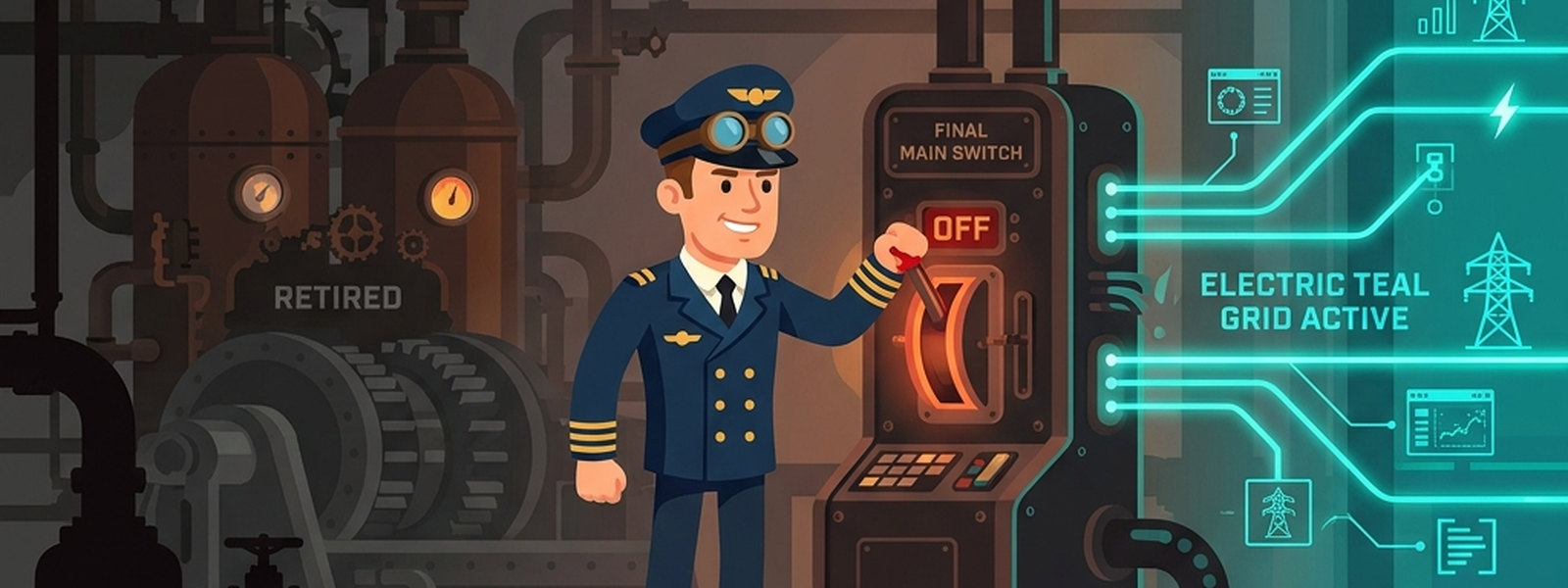
Opening Scene
A facility that’s successfully connected to the grid doesn’t keep its old generator running indefinitely “just in case,” once the transition is genuinely verified complete — that would mean paying to maintain two systems instead of one, with none of the actual benefit. Migrating fully to a cloud data warehouse deserves this same deliberate final step: decommissioning the legacy system once the migration, covered in Article 7, is genuinely verified complete.
In Plain English
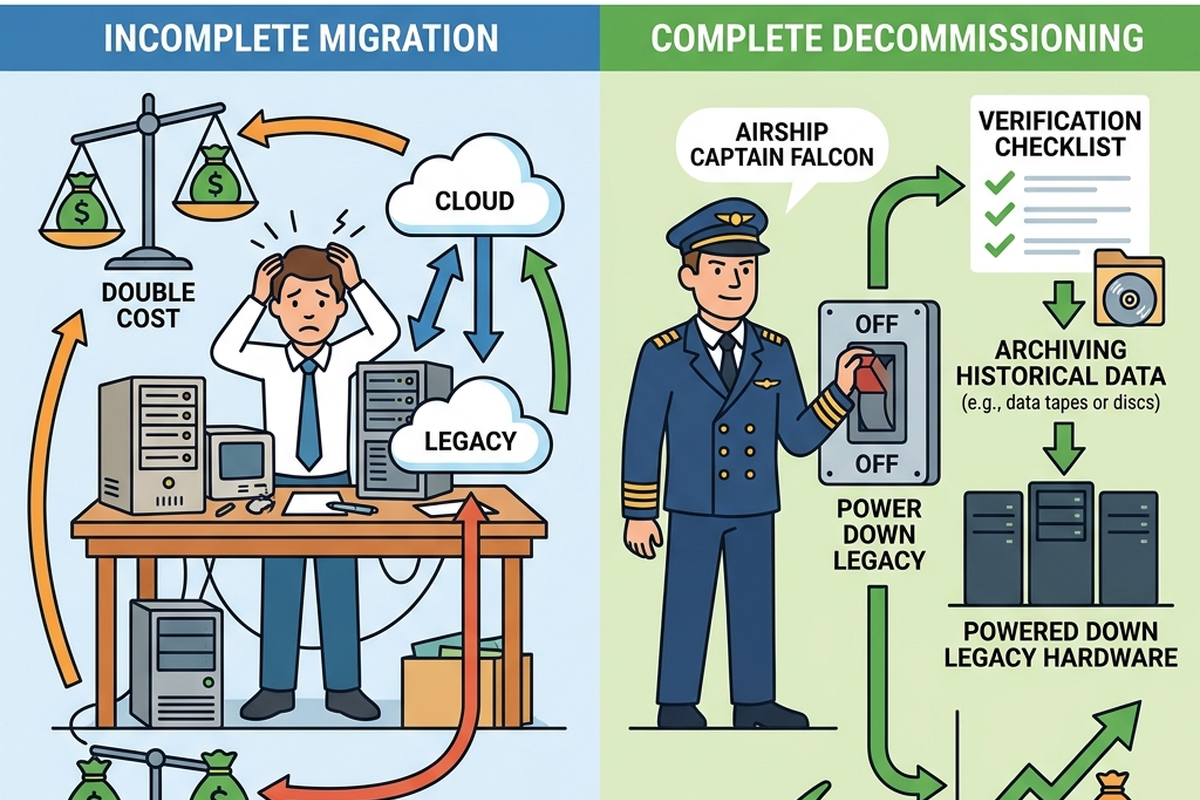
Decommissioning legacy warehouse infrastructure means formally retiring the old system only after a genuine, thorough verification period, covered in Article 7, has confirmed data correctness and system reliability in the new environment. Delaying this step indefinitely, out of an abundance of caution, means paying to maintain two systems simultaneously, forfeiting much of the actual cost benefit the migration was meant to achieve.
The Old Way
Before deliberate decommissioning was treated as a genuine, necessary final phase, organizations sometimes let migrations linger incomplete indefinitely:
- Some organizations kept legacy systems running indefinitely after a cloud migration, out of caution, without a clear, deliberate plan for when decommissioning would actually happen.
- There wasn’t yet a well-established practice of treating decommissioning as its own genuine, necessary final phase of a migration project.
- Running two systems simultaneously, longer than genuinely necessary, meant forfeiting much of the cost benefit the migration was meant to achieve.
Treating decommissioning as a deliberate, planned final phase, not an indefinitely delayed afterthought, reflects the migration discipline covered throughout this content library’s dedicated data platform migration series.
What’s Changing (and Why AI Is the Reason)
- Migration plans increasingly include a deliberate, scheduled decommissioning phase, connecting directly to the parallel-verification process covered in Article 7.
- This connects directly to the cost management principles covered throughout this content library, since running two systems indefinitely genuinely undermines the cost benefit of cloud migration.
- As migration playbooks have matured, decommissioning criteria — specific verification benchmarks that must be met first — are increasingly defined explicitly at the start of a migration project.
The Metaphor, Fully Extended
| The Utility Grid | Decommissioning Legacy Infrastructure Concept |
|---|---|
| Not keeping the old generator running indefinitely “just in case” | Not keeping legacy warehouse infrastructure running indefinitely |
| Paying to maintain two systems with none of the actual benefit | Paying to maintain two systems, forfeiting much of the migration’s cost benefit |
| A deliberate final step once the transition is genuinely verified | A deliberate final step once the migration is genuinely verified |
| Full retirement, not indefinite, cautious coexistence | Full decommissioning, not indefinite, cautious coexistence |
For Beginners: What to Actually Do
- Practice defining explicit decommissioning criteria — specific verification benchmarks — at the start of a migration project, not as an afterthought.
- Learn to recognize the real, ongoing cost of running two systems simultaneously longer than genuinely necessary.
- Get comfortable exploring the migration verification process covered in Article 7 as the basis for deciding when decommissioning is genuinely ready.
For Practitioners and Leaders: The Deeper Layer
- Define explicit decommissioning criteria at the start of any migration project, connecting directly to the verification process covered in Article 7.
- Track the ongoing cost of maintaining legacy infrastructure post-migration, treating it as a genuine, trackable cost of an incomplete migration.
- Build decommissioning into migration project plans as its own deliberate, scheduled phase, not an indefinitely delayed afterthought.
Quick Recap
- Decommissioning legacy infrastructure is a deliberate, necessary final phase of a cloud data warehouse migration.
- This should happen only after genuine verification, covered in Article 7, confirms data correctness and reliability.
- Delaying decommissioning indefinitely forfeits much of the migration’s actual cost benefit.
- Explicit decommissioning criteria should be defined at the start of a migration project.
Where This Fits in the Series
Article 19 covered completing the migration through deliberate decommissioning. Article 20, the series capstone, reassembles the entire picture: a city fully wired.
Key References
- Snowflake Documentation — Comprehensive technical documentation for cloud-native data warehousing.
- Google Cloud BigQuery Architecture Overview — Scalable serverless cloud database specifications.
- AWS Redshift Database Developer Guide — Amazon Web Services cloud data warehouse documentation.
Subscribe to the Newsletter
Get the latest DataParables articles delivered straight to your inbox.