
Opening Scene
A utility customer with no genuine alternative provider available has little leverage if the rate plan changes unfavorably — they simply have to accept it. Organizations deeply committed to a single cloud data warehouse platform, with data and workflows built specifically around its proprietary features, can face this same limited leverage if pricing or terms change unfavorably.
In Plain English
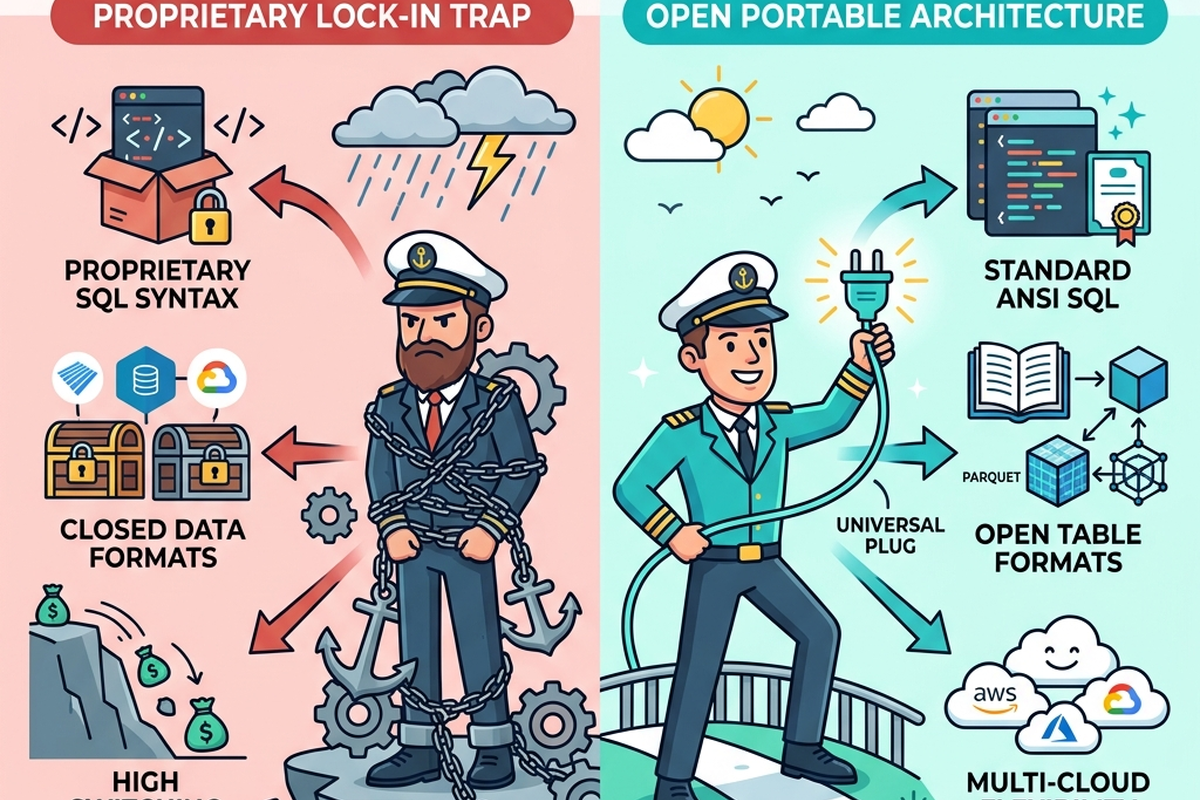
Vendor lock-in happens when an organization’s data, tooling, and workflows become so deeply dependent on one cloud data warehouse platform’s specific, proprietary features that switching to another platform would require genuinely significant rework. This connects directly to the multi-cloud strategy considerations covered in this content library’s dedicated multi-cloud and hybrid strategies series, and deliberate architectural choices — favoring open, portable formats and standard SQL where reasonable — can meaningfully reduce this risk without sacrificing genuine platform-specific value.
The Old Way
Before vendor lock-in risk was widely and deliberately planned for, organizations sometimes adopted platform-specific features without weighing this tradeoff:
- Organizations sometimes adopted a platform’s proprietary features extensively, without deliberately weighing the resulting switching cost against the genuine value those features provided.
- There wasn’t yet a well-established practice of favoring open, portable data formats specifically to preserve future flexibility.
- Pricing or terms changes were sometimes discovered only after they’d already taken effect, with limited organizational leverage to respond.
Deliberately weighing platform-specific value against genuine lock-in risk, and favoring portable formats where reasonable, reflects a maturing understanding of this real, practical tradeoff.
What’s Changing (and Why AI Is the Reason)
- Organizations increasingly weigh platform-specific feature value against genuine lock-in risk deliberately, connecting directly to the multi-cloud strategy considerations covered in this content library’s dedicated series.
- This connects directly to the platform selection considerations covered in Article 8, since lock-in risk is a genuine, concrete factor in that evaluation.
- As open, portable table formats have matured, organizations increasingly have practical options for reducing lock-in risk without fully sacrificing platform-specific capability.
The Metaphor, Fully Extended
| The Utility Grid | Vendor Lock-In Concept |
|---|---|
| A customer with no genuine alternative provider available | An organization with genuinely significant switching costs |
| Little leverage if the rate plan changes unfavorably | Little leverage if pricing or platform terms change unfavorably |
| Deep dependence limiting future flexibility | Deep dependence on proprietary features limiting future flexibility |
| Weighing current convenience against future flexibility | Weighing current platform-specific value against future switching cost |
For Beginners: What to Actually Do
- Practice identifying which of your organization’s current platform dependencies would be genuinely costly to switch away from.
- Learn to weigh a platform-specific feature’s genuine value against the switching cost it introduces before adopting it extensively.
- Get comfortable exploring open, portable data format options as a way to preserve future flexibility.
For Practitioners and Leaders: The Deeper Layer
- Deliberately weigh lock-in risk as a concrete factor in platform selection, connecting directly to the evaluation covered in Article 8.
- Connect lock-in mitigation strategy directly to this content library’s dedicated multi-cloud and hybrid strategies series.
- Favor open, portable formats and standard SQL where reasonable, preserving future flexibility without fully sacrificing platform-specific value.
Quick Recap
- Vendor lock-in happens when deep dependence on a platform’s proprietary features makes switching genuinely costly.
- This connects directly to the multi-cloud strategy considerations covered in this content library’s dedicated series.
- Deliberately weighing feature value against switching cost helps manage this risk proactively.
- Open, portable data formats can meaningfully reduce lock-in risk without fully sacrificing platform value.
Where This Fits in the Series
Article 16 covered vendor lock-in risk. Article 17 turns to building codes for the new wiring: governance and compliance for cloud data warehouses.
Key References
- Snowflake Documentation — Comprehensive technical documentation for cloud-native data warehousing.
- Google Cloud BigQuery Architecture Overview — Scalable serverless cloud database specifications.
- AWS Redshift Database Developer Guide — Amazon Web Services cloud data warehouse documentation.
Subscribe to the Newsletter
Get the latest DataParables articles delivered straight to your inbox.