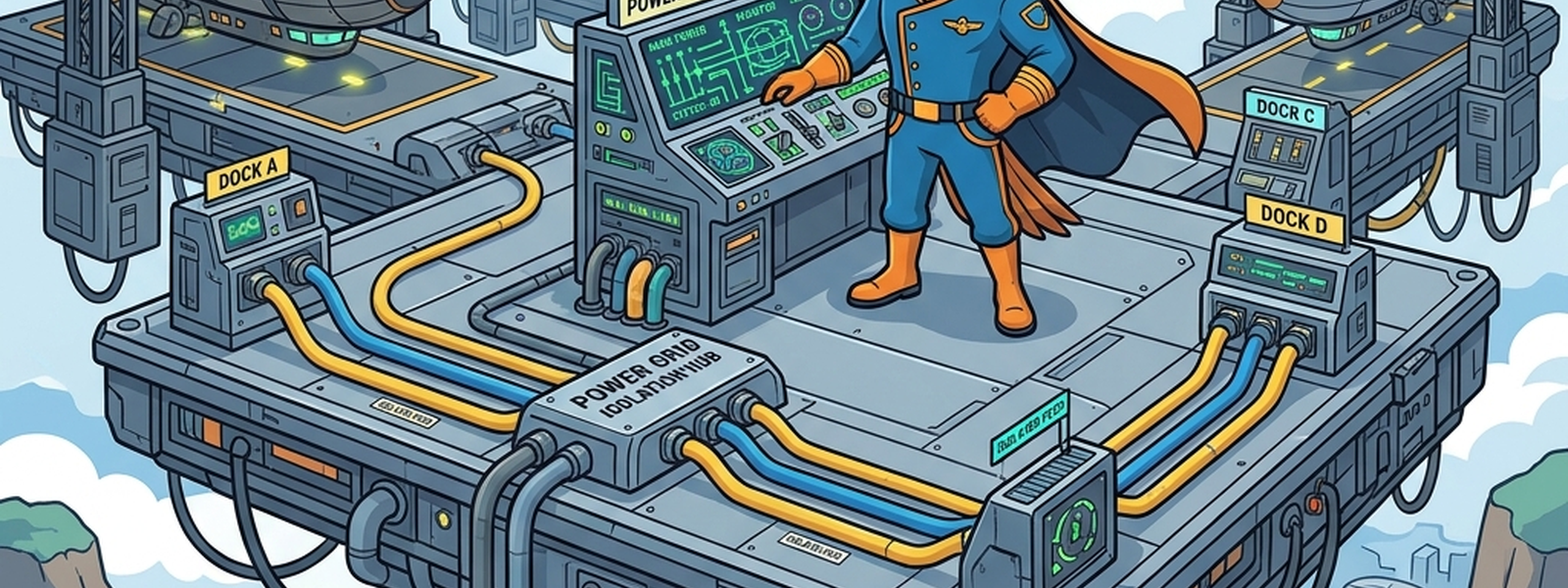
Opening Scene
A shared power grid serves an entire neighborhood, and a well-designed grid ensures one household running an unusually demanding appliance doesn’t cause the lights to flicker for everyone else nearby. A cloud data warehouse, serving multiple internal teams and workloads on the same underlying platform, needs this same deliberate isolation, so one team’s heavy workload doesn’t degrade performance for everyone else.
In Plain English
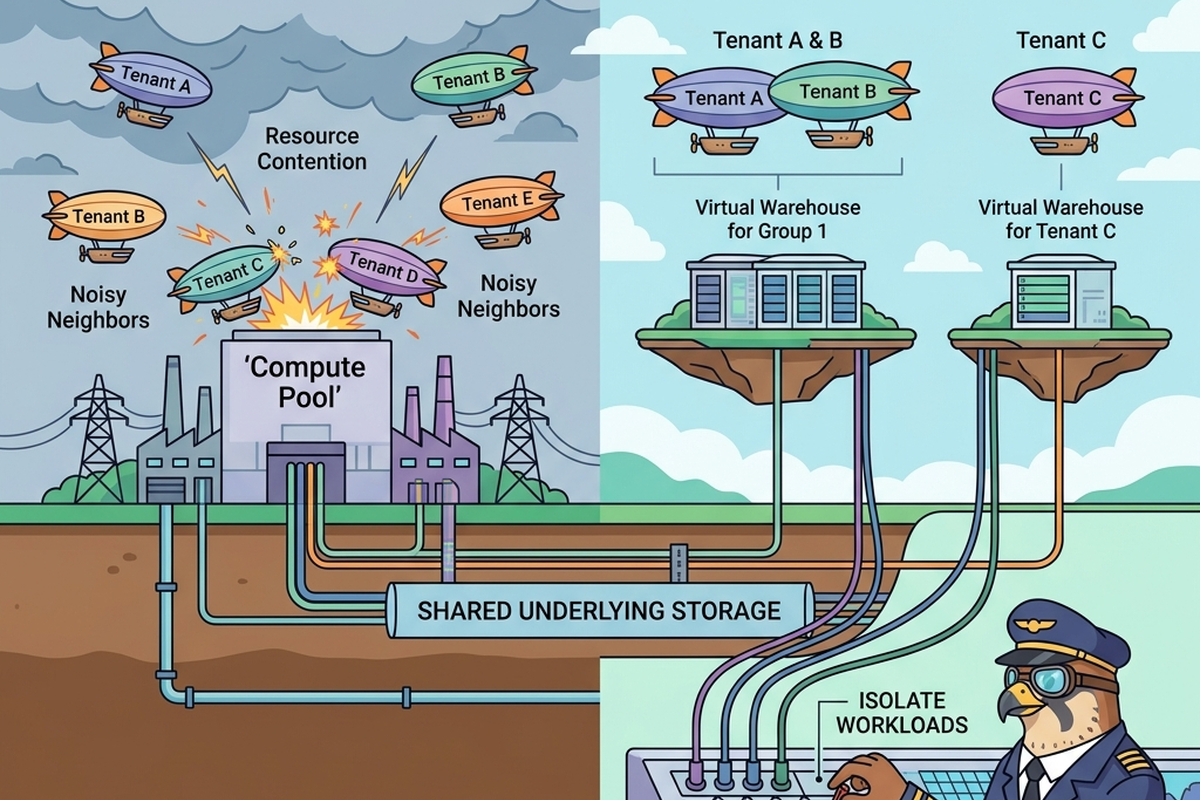
Workload isolation ensures that different teams or workloads sharing the same cloud data warehouse platform don’t compete destructively for the same compute resources, connecting directly to the storage-compute separation covered in Article 4, which lets independent compute clusters be spun up for different teams or purposes, isolated from each other, even while sharing the same underlying storage.
The Old Way
Before workload isolation was a mature, well-implemented capability, sharing warehouse infrastructure across teams created real, recurring friction:
- Sharing a single, undifferentiated compute resource across multiple teams sometimes meant one team’s heavy workload could genuinely degrade performance for everyone else.
- There wasn’t yet a well-established practice of spinning up genuinely independent compute clusters for different teams while sharing common underlying storage.
- Contention for shared resources sometimes required manual coordination and scheduling between teams, an ongoing operational burden.
Independent compute clusters, isolated from each other while sharing common storage, emerged specifically to solve this contention problem, directly enabled by the storage-compute separation covered in Article 4.
What’s Changing (and Why AI Is the Reason)
- Cloud data warehouses increasingly support genuinely independent compute clusters per team or workload, connecting directly to the storage-compute separation covered in Article 4.
- This connects directly to the circuit-breaker-style resource governance covered in Article 12, which provides additional protection within a shared cluster when full isolation isn’t practical.
- As this capability has matured, organizations increasingly design their cloud data warehouse deployment around genuine team and workload isolation from the start, rather than retrofitting it after contention problems arise.
The Metaphor, Fully Extended
| The Utility Grid | Workload Isolation Concept |
|---|---|
| A shared grid serving an entire neighborhood | A shared platform serving multiple internal teams |
| One household’s demanding appliance not affecting everyone else | One team’s heavy workload not degrading performance for everyone else |
| Deliberate grid design ensuring this isolation | Deliberate compute cluster design ensuring this isolation |
| Independent circuits sharing the same underlying grid | Independent compute clusters sharing the same underlying storage |
For Beginners: What to Actually Do
- Practice setting up separate compute clusters for different workloads within a shared cloud data warehouse platform.
- Learn to recognize signs of resource contention, like one workload’s queries slowing down when another team runs a heavy job.
- Get comfortable exploring how your specific platform implements independent compute clusters sharing common storage.
For Practitioners and Leaders: The Deeper Layer
- Design cloud data warehouse deployments around genuine team and workload isolation from the start, connecting directly to the storage-compute separation covered in Article 4.
- Monitor for resource contention symptoms proactively, rather than waiting for teams to report performance problems.
- Connect workload isolation planning directly to the resource governance covered in Article 12 for additional protection layers.
Quick Recap
- Workload isolation prevents different teams’ workloads from competing destructively for the same compute resources.
- This is directly enabled by the storage-compute separation covered in Article 4.
- Independent compute clusters sharing common storage is the primary technique for achieving this isolation.
- This should be designed in from the start, rather than retrofitted after contention problems arise.
Where This Fits in the Series
Article 11 covered workload isolation across teams. Article 12 turns to the circuit breaker that protects the house: resource governance and concurrency controls.
Key References
- Snowflake Documentation — Comprehensive technical documentation for cloud-native data warehousing.
- Google Cloud BigQuery Architecture Overview — Scalable serverless cloud database specifications.
- AWS Redshift Database Developer Guide — Amazon Web Services cloud data warehouse documentation.
Subscribe to the Newsletter
Get the latest DataParables articles delivered straight to your inbox.