
Opening Scene
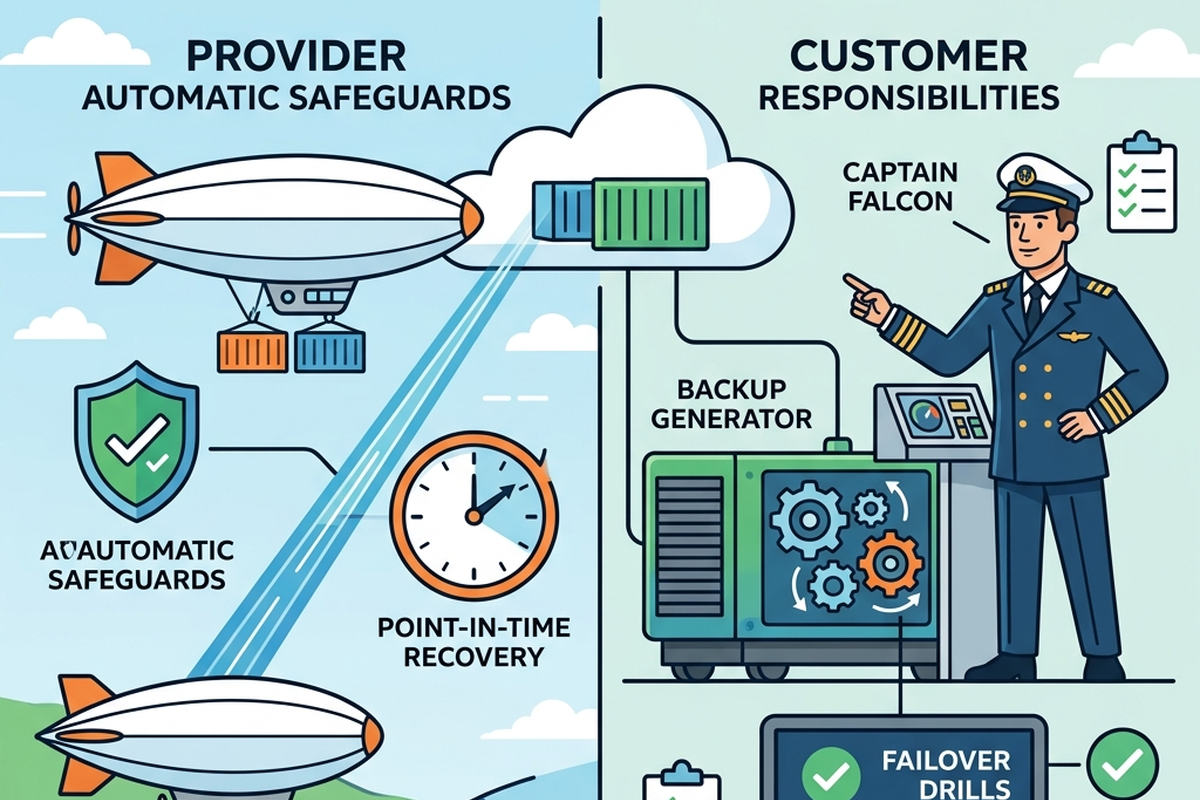
Even a genuinely reliable utility grid occasionally has an outage, and a critical facility that truly can’t afford to lose power keeps a backup generator ready regardless, precisely because “the grid is usually reliable” isn’t the same guarantee as “the grid will never fail.” A cloud data warehouse, however reliable, deserves this same honest planning: redundancy and disaster recovery, even under a fully managed service.
In Plain English
Redundancy and disaster recovery for a cloud data warehouse means understanding what your specific platform provides automatically — often cross-region replication and automated backups — and what additional planning genuinely remains your own responsibility, connecting directly to the managed-service boundaries covered in Article 6. This includes testing recovery procedures deliberately, not just assuming the provider’s built-in redundancy is automatically sufficient for your specific business continuity requirements.
The Old Way
Before this honest, deliberate planning was standard practice for cloud data warehouses specifically, organizations sometimes assumed managed infrastructure was automatically fail-safe:
- Some organizations assumed a fully managed cloud service was automatically immune to any outage risk, without deliberate testing of their own specific recovery procedures.
- There wasn’t yet a well-established practice of clearly distinguishing what redundancy a platform provides by default from what additional planning remains genuinely necessary.
- Recovery procedures were sometimes documented but never actually tested, discovered to have gaps only during a real incident.
Honest, deliberate disaster recovery planning, distinguishing provider defaults from remaining organizational responsibility, reflects the managed-service boundary awareness covered in Article 6, applied here specifically to business continuity.
What’s Changing (and Why AI Is the Reason)
- Organizations increasingly test disaster recovery procedures deliberately, rather than assuming a provider’s built-in redundancy is automatically sufficient.
- This connects directly to the managed-service boundaries covered in Article 6, since understanding exactly what’s covered automatically is essential to planning what isn’t.
- As cloud data warehouse platforms mature, cross-region replication and automated backup capabilities increasingly become configurable, requiring deliberate setup rather than assumed default coverage.
The Metaphor, Fully Extended
| The Utility Grid | Disaster Recovery Concept |
|---|---|
| Even a reliable grid occasionally having an outage | Even a reliable managed service occasionally having an incident |
| A backup generator kept ready regardless | Redundancy and recovery procedures planned regardless |
| “Usually reliable” not being the same guarantee as “never fails” | Managed and reliable not being the same guarantee as never needing recovery |
| Honest planning for the exception, not just the norm | Honest planning for the exception, not just the managed-service norm |
For Beginners: What to Actually Do
- Practice reviewing your cloud data warehouse platform’s default redundancy and backup capabilities, distinguishing them from what requires additional configuration.
- Learn to test a recovery procedure deliberately, rather than assuming it would work if actually needed.
- Get comfortable exploring the managed-service boundaries covered in Article 6 as they apply specifically to disaster recovery.
For Practitioners and Leaders: The Deeper Layer
- Require deliberate testing of disaster recovery procedures, not just documentation, connecting directly to the managed-service boundaries covered in Article 6.
- Clearly document what redundancy your platform provides by default versus what remains your organization’s own responsibility to configure.
- Build recovery testing into a regular, recurring operational cadence, not a one-time setup task.
Quick Recap
- Redundancy and disaster recovery for a cloud data warehouse requires understanding what’s covered automatically versus what remains your responsibility.
- This connects directly to the managed-service boundaries covered in Article 6.
- Recovery procedures should be tested deliberately, not just documented and assumed to work.
- Cross-region replication and backup capabilities often require deliberate configuration, not just default coverage.
Where This Fits in the Series
Article 10 covered redundancy and disaster recovery planning. Article 11 turns to sharing the grid with your neighbors: multi-tenancy and workload isolation.
Key References
- Snowflake Documentation — Comprehensive technical documentation for cloud-native data warehousing.
- Google Cloud BigQuery Architecture Overview — Scalable serverless cloud database specifications.
- AWS Redshift Database Developer Guide — Amazon Web Services cloud data warehouse documentation.
Subscribe to the Newsletter
Get the latest DataParables articles delivered straight to your inbox.